Gallstone Symptoms: When Is Surgery Needed?
Most gallstones sit silently, but when one blocks a duct the pain is unmistakable. Here is how the different attacks feel, which ones are emergencies, and why surgery is the standard answer for symptomatic stones.
Dhaara Speciality Hospital, Yelahanka
61 Jakkur Road, Yelahanka, Bengaluru 560064
24/7
Emergency Care
Insurance & cashless
Treatment support
Key Takeaways
- Silent gallstones found on scans usually need no treatment — only observation and advice.
- Repeated biliary colic (pain after fatty meals, right upper abdomen, lasting 1–5 hours) is the usual reason surgery is advised.
- Fever with the pain suggests cholecystitis (inflamed gallbladder) — this needs same-day medical care.
- Yellow eyes, dark urine or pale stools mean a stone may be in the bile duct — urgent assessment and often an ERCP first.
- Laparoscopic cholecystectomy (keyhole gallbladder removal) is the standard treatment for symptomatic gallstones.
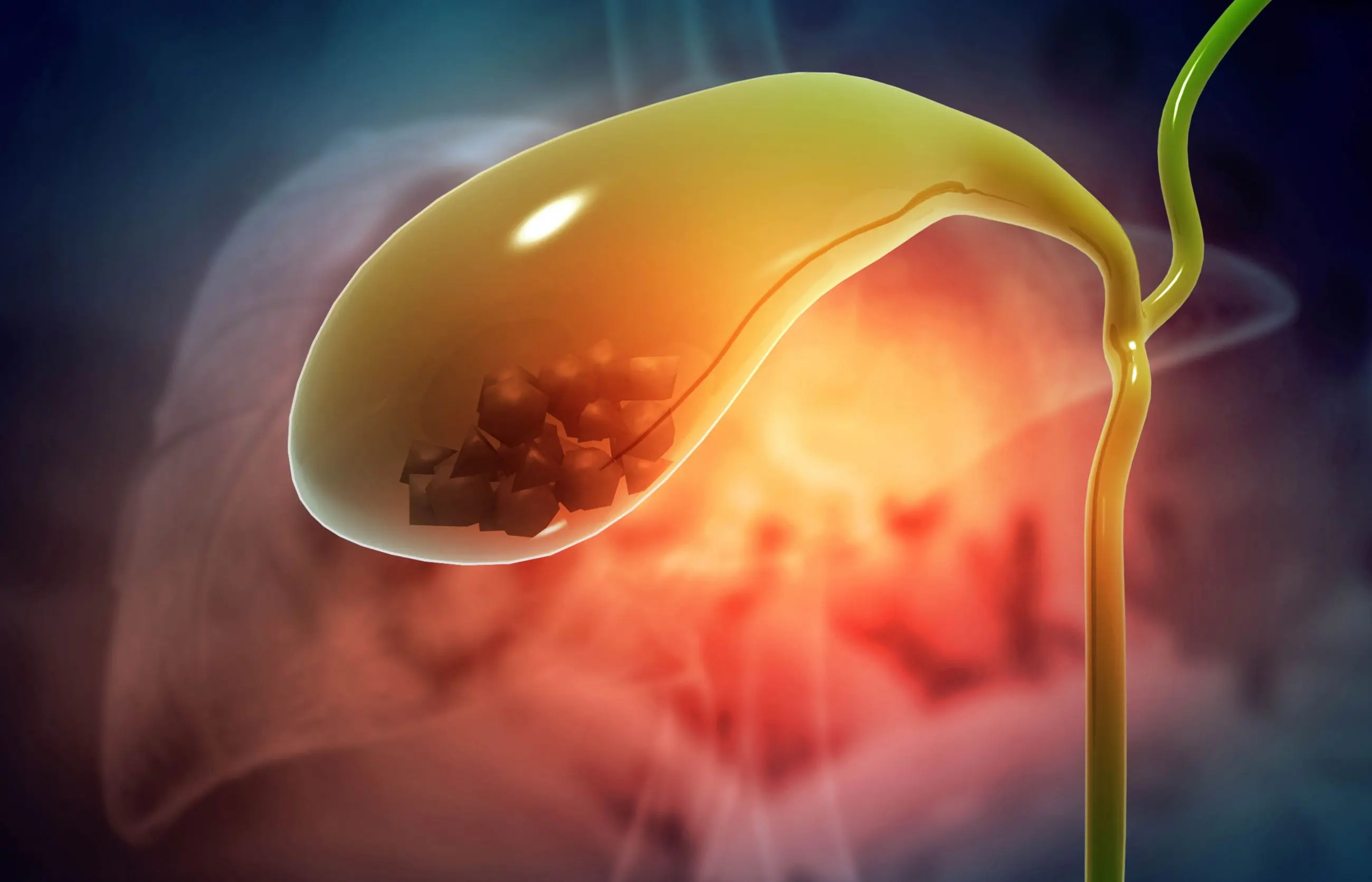
Gallstones are hardened deposits that form in the gallbladder, the small pouch under the liver that stores bile. They are extremely common — many people carry them without ever knowing. Problems begin when a stone blocks the outlet of the gallbladder or one of the bile ducts, and the pattern of that blockage decides how urgently you need care.
The Five Patterns of Gallstone Disease
| Pattern | Typical experience | What it means |
|---|---|---|
| Silent stones | Found incidentally on a scan; no symptoms | Usually no treatment; discuss with a doctor |
| Biliary colic | Sharp cramping pain in the right upper abdomen after heavy/fatty meals; lasts minutes to a few hours, then settles; nausea common | Surgical opinion advised — attacks tend to recur |
| Cholecystitis | Pain lasting more than 5–6 hours, fever, vomiting, tenderness on the right side | Inflamed gallbladder — same-day hospital care, then surgery |
| Bile duct stone (jaundice) | Yellowing of eyes/skin, dark urine, pale stools, often with pain | Urgent care — often an ERCP to clear the duct before surgery |
| Gallstone pancreatitis | Severe pain boring through to the back with vomiting | Emergency admission |
Seek Emergency Care Immediately If There Is:
Emergency Indicators
- Abdominal pain with fever and chills
- Yellowing of the eyes or skin, dark urine
- Pain lasting more than 6 hours without relief
- Repeated vomiting with severe upper abdominal pain
- Confusion or drowsiness with any of the above
Plan a Consultation Soon If
- You have had repeated short attacks of right-upper pain after meals
- A scan has shown stones and you get occasional discomfort
- You are pregnant or diabetic and have symptomatic stones
- Gallstones run in your family and you want advice
Dhaara Speciality Hospital, Yelahanka runs emergency services 24/7 — call 87478 74666. For planned opinions, the gallbladder surgery page explains the operation in detail.
How Gallstones Are Confirmed
- Ultrasound scan — the standard first test; it detects most gallstones reliably. Our ultrasound facility does this as an outpatient procedure.
- Liver function blood tests — to check whether a stone is affecting the bile ducts.
- MRCP or ERCP — detailed imaging (or treatment) of the bile duct when a duct stone is suspected. Read about ERCP at Dhaara.
Why Surgery Is the Standard Advice for Symptomatic Stones
The gallbladder is removed — not the stones alone — because stones reform in a diseased gallbladder. Medicines or diets do not reliably dissolve or flush gallstones, and waiting between attacks carries the risk of a complication (cholecystitis, duct stone, pancreatitis). The operation itself, laparoscopic cholecystectomy, is one of the most commonly performed keyhole procedures worldwide: small incisions, often a day-care or one-night stay, and return to normal food quickly. Your surgeon will confirm suitability and timing for your case.
For what to expect afterwards — diet stages, digestion changes and recovery — see our guide on life after gallbladder removal.
Frequently Asked Questions
Questions About Your Surgery?
Talk to the surgical gastroenterology team at Dhaara Speciality Hospital, Yelahanka. Same-day appointments available.
Related Patient Guides
Life After Gallbladder Removal
Diet stages, digestion changes and recovery after keyhole cholecystectomy.
Preparing for Surgery
Tests, medicines, fasting, packing — the complete pre-op checklist.
Surgery Patient Guides
Symptoms, preparation, recovery and warning signs — explained simply.

.webp)
.webp)