If transplant has entered the conversation — for you or someone you love — this page explains the whole journey honestly: when it becomes the right conversation, the two donor routes, what evaluation involves, and what life looks like afterwards.
Medically reviewed by Dr. Srinivas Bojanapu · September 2026
10,000+
Patients Treated
15+ Years
Surgical Experience
24/7
Emergency Care
In 30 seconds
- What it is: replacing a diseased, non-functioning liver with a healthy donor liver — the only definitive treatment for end-stage liver disease and selected liver cancers.
- The outcomes: excellent — 5-year survival exceeds 75–80%; living-donor transplants at experienced centres report 90%+ one-year survival.
- The two routes: deceased donor (via the Karnataka ZTCC pool) or a living donor — usually a family member, since the liver regenerates.
- The single most important variable: timing. Too late loses options; evaluation begins at the right MELD, never after decompensation.
- Our role: Dhaara evaluates, optimises and prepares you — and coordinates with leading Bangalore transplant centres for the surgery itself.
What a liver transplant actually is
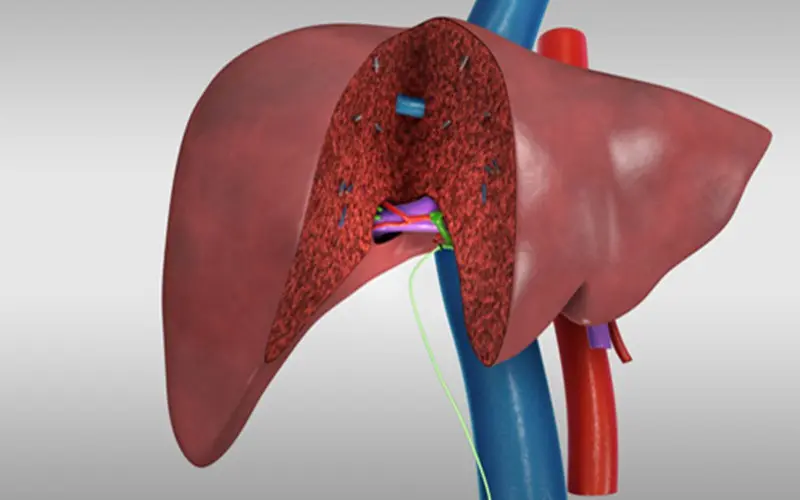
The liver is the only human organ that regenerates — and transplantation exploits that fact twice over. In a living-donor transplant, a healthy family member gives a lobe of their liver: both the donated lobe and the donor's remaining liver regrow substantially within weeks. In a deceased-donor transplant, a whole liver from a brain-dead donor is placed after the failed liver is removed. The new liver immediately does what the scarred one could not — clotting, clearing toxins, making proteins — which is why recipients describe feeling clearer within days. What decides success is not only the surgery: it is the condition of the patient walking into it, and the timing of the referral.
When is transplant the right conversation?
First decompensation
Ascites, variceal bleed, jaundice or encephalopathy — the first sign the liver can no longer compensate is often the moment evaluation should begin.
MELD climbing despite optimal therapy
A score rising on best medical therapy (see the table below) tells us the liver is losing ground — evaluation begins at MELD 10–18, listing becomes active at 19–24.
Liver cancer within Milan criteria
A single tumour ≤5 cm, or up to three nodules ≤3 cm — transplant cures the cancer and the cirrhosis that produced it. See liver cancer.
Failing quality of life
Recurrent hospitalisations, intractable itching, muscle loss — numbers are not the only argument; life quality counts.
And when is it not the answer? When the MELD is still low (under 10 — close monitoring serves you better), when cancer has grown beyond transplant criteria, and when the cause of liver damage is still active (alcohol must be stopped for good). Candidacy is individualised — a low MELD today is not a permanent no.
Understanding the MELD score
MELD is calculated from three blood numbers — bilirubin, creatinine and INR — and predicts 90-day mortality in cirrhosis. It is the number that drives deceased-donor organ priority, and the number we track at every visit:
| MELD score | 3-month mortality | What it means |
|---|---|---|
| <10 | <2% | Close monitoring; transplant not urgent |
| 10–18 | 4–12% | Transplant evaluation should begin |
| 19–24 | 20–25% | Active transplant listing recommended |
| 25–30 | 30–50% | Priority listing; urgent optimisation |
| >30 | >50% | Urgent; consider ICU-level care |
The two routes: deceased donor vs living donor
DDLT — deceased donor
A liver from a brain-dead donor, allocated through ZTCC (Zonal Transplant Coordination Centre). Karnataka runs a reasonably active deceased-donor programme. Waiting time depends on blood group, MELD score and organ availability — typically 6–24 months, longer for blood group O.
LDLT — living donor
A living donor (typically a family member) donates the right or left lobe. Advantages: no waiting time, planned surgery, better outcomes. Donor criteria: 18–50 years, compatible blood group, BMI <30, good health. LDLT is more common in India than DDLT. The donor's liver regenerates completely within 6–8 weeks.
How it actually happens — the pathway, step by step
- Evaluation. A comprehensive workup: LFT, CBC, coagulation, AFP, viral markers; MELD calculation and tracking; triple-phase CT/MRI; endoscopy for varices; cardiac (echo, stress testing), pulmonary and renal assessment; psychosocial evaluation and transplant counselling; nutritional optimisation.
- Route chosen. Living donor evaluation support, or ZTCC registration and coordination — both explained to the family in plain language, with honest trade-offs.
- Pre-transplant optimisation. The step that measurably improves surgical outcomes: ascites control (diuretics, paracentesis, TIPS evaluation), variceal banding and beta-blockers, encephalopathy management (lactulose, rifaximin), nutrition and BCAA supplementation, infection prevention, renal protection (avoiding kidney-toxic drugs, IV albumin).
- Surgery at the transplant centre. We coordinate with leading Bangalore transplant centres for the operation itself — you arrive already optimised, already documented, already known.
- Post-transplant follow-up at Dhaara. Back home in Yelahanka for the long term: immunosuppression monitoring (tacrolimus, mycophenolate, prednisolone), rejection surveillance with liver biopsies when indicated, infection monitoring and prophylaxis, HCC surveillance (CT/AFP) where relevant, and management of metabolic complications (PTDM, hypertension, dyslipidaemia), bone health and nephroprotection.
Preparation checklist — what evaluation asks of you
- Complete blood work: LFT, CBC, coagulation, AFP, viral markers
- Imaging: triple-phase CT/MRI; endoscopy for variceal assessment
- Heart and lungs: echocardiography, stress testing, pulmonary function tests
- Kidney function evaluation
- Psychosocial assessment and transplant counselling — bring your family
- Nutritional optimisation with our dieticians
- Living donor candidates: full medical, psychological and imaging evaluation
- Documents for insurance / Ayushman Bharat / Arogya Karnataka pre-authorization
The honest risks
| For whom | Common | Serious / rare |
|---|---|---|
| Living donor | Wound pain, fatigue; major complications 10–15% | Mortality approximately 0.1–0.5% for right-lobe donation — the reason evaluation is rigorous |
| Recipient — early | Infection risk, bleeding, bile-duct issues | Rejection episodes — watched with biopsies when indicated |
| Recipient — long term | Metabolic effects of immunosuppression: PTDM, hypertension, dyslipidaemia | Kidney and bone effects — managed with nephroprotection and bone-health care |
Every number above is discussed with the family in counselling — including the donor's, before anyone signs anything.
What is the outlook?
The numbers justify the phrase "a new liver, a new life". Five-year survival exceeds 75–80%; living-donor transplants at experienced Indian centres report 90%+ one-year survival, with most recipients returning to work and normal family life. The variable that moves these numbers most is timing — recipients operated in good condition do better. That is the entire argument for referral being planned early: too early wastes nothing, too late loses options.
Life afterwards
Medicines, for life
Immunosuppression tablets daily — tacrolimus, mycophenolate, prednisolone — with levels checked periodically. Missing doses is the one habit a recipient cannot afford.
Infection care, early months
Simple precautions in the first months while immunity is deliberately lowered: safe food, prompt attention to fever. These ease with time.
The graft check-up calendar
Periodic blood monitoring, liver biopsies when indicated, HCC surveillance (CT/AFP) if you were transplanted for cancer — all coordinated at our Yelahanka clinic.
Alcohol — stays stopped
For good. Most recipients describe the trade — daily tablets in exchange for a working liver — as entirely worthwhile.
Questions to ask your doctor
- What is my MELD score — and how has it trended?
- Am I a transplant candidate now, or do we monitor?
- Living donor or deceased donor — what are my honest trade-offs?
- If a living donor: who in my family qualifies — and what are their risks?
- What will be optimised before surgery in my case?
- Which transplant centre — and what is the written cost picture?
- What does follow-up at Dhaara look like after surgery?
If you would like more confidence about your diagnosis or treatment plan, seeking a second opinion is reasonable.
Frequently Asked Questions
How long is the waiting time for a liver transplant in Bangalore?
Deceased-donor (DDLT) waiting time in Karnataka is typically 6–24 months and depends heavily on MELD score and blood group — blood group O patients wait longer. Living-donor (LDLT) has no waiting time once the donor is evaluated and approved: surgery can proceed within weeks of listing.
Is the living donor at risk?
Living liver donation is major surgery with real risks. Donor mortality is approximately 0.1–0.5% for right-lobe donation, and the major complication rate is 10–15%. The remaining liver regenerates completely within 6–8 weeks. Donors undergo thorough medical, psychological and imaging evaluation to ensure safety before any decision.
How successful is liver transplantation today?
Excellent. With modern surgical techniques and immunosuppression, 5-year survival exceeds 75–80%, and living-donor transplants at experienced Indian centres report 90%+ one-year patient survival — most recipients return to work and normal family life. Success depends heavily on timing and recipient condition, which is the strongest argument for early referral.
What is the cost of a liver transplant in Bangalore?
Total cost (surgery, ICU, immunosuppression for the first year) is typically ₹20–35 lakh at leading Bangalore centres; living-donor transplants typically ₹18–30 lakh. Many insurance plans and government schemes (Ayushman Bharat, Arogya Karnataka) cover transplantation — we assist with documentation and pre-authorization, and give families a realistic written cost picture during counselling. No surprises.
Can a family member donate part of their liver?
Yes — the liver's unique ability to regenerate makes living-donor transplant standard practice in India (more common here than deceased donation). Donors must be 18–50 years, of compatible blood group, BMI under 30, and in good health. Both donor and recipient livers regenerate; full safety counselling precedes any decision.
What is the MELD score and why does it matter?
MELD is a laboratory score (bilirubin, creatinine, INR) predicting short-term survival in cirrhosis. It drives deceased-donor organ allocation priority and flags the right time to begin transplant evaluation — we track it at every visit.
What does life after transplant involve?
Lifelong immunosuppression tablets (tacrolimus, mycophenolate, prednisolone) — a blessing with minor trade-offs; infection precautions in the early months; periodic graft monitoring with liver biopsies when indicated. Alcohol must stay stopped. Most recipients describe the trade as entirely worthwhile.
How Dhaara Speciality Hospital can help
And if you need us, here is what stands ready for you under one roof in Yelahanka, Bangalore:
- Complete transplant evaluation — hepatology workup, MELD tracking, cardiac/pulmonary/renal assessment, psychosocial counselling
- Pre-transplant optimisation — ascites, varices, encephalopathy, nutrition, infection and renal protection
- Living-donor evaluation support — and ZTCC coordination for the deceased-donor route
- Coordination with leading Bangalore transplant centres for the surgery itself
- Lifelong post-transplant follow-up at Yelahanka — immunosuppression, rejection surveillance, metabolic care
- 24/7 emergency and critical care — 87478 74666
Dr. Srinivas Bojanapu's specialist site offers in-depth patient information on transplant candidacy, the MELD score, LDLT vs DDLT, and what to expect at each stage: Liver Transplant Information — Dr. Srinivas Bojanapu.

Dr. Srinivas Bojanapu
MBBS, MS, FACRSI, DrNB, PDF — Surgical Gastroenterologist & HPB Surgeon with 16+ years of experience and 5,000+ procedures.
Medically reviewed by Dr. Srinivas Bojanapu — MBBS, MS, FACRSI, DrNB, PDF · Surgical Gastroenterologist & HPB Surgeon · Last updated: September 2026.
This page provides general information and is not a substitute for personal medical advice, diagnosis or treatment. Treatment decisions are always individualised after clinical assessment.
Sources & standards:
- Institutional figures on this page (patients treated) are based on Dhaara Hospital records; outcome and cost ranges reflect published data from established Bangalore transplant centres.
- Transplant evaluation and referral follow internationally accepted guidance (AASLD/EASL) and Karnataka ZTCC allocation protocols.
Book Your Consultation
Transplant is a conversation best had early — when every option is still open. Start the evaluation at Dhaara Speciality Hospital, Yelahanka.
Words From Our Happy Clients
Glowing testimonials from satisfied clients share their positive experiences.
Dhaara Speciality Hospital is a trusted healthcare institution equipped with state-of-the-art facilities and a team of skilled surgeons, including specialists in laparoscopic procedures. Choosing Dhaara for your laparoscopic gallbladder surgery comes with several advantages.
More Reviews
Vinay T
India
Surprised at the excellent facilities
I visited Dhaara Hospital and consulted with Dr. Prathima, a fantastic gynecologist. She's professional, friendly, and listens to my concerns. Her treatment worked well for me, and she always suggests the best.
Suchetha
India
Surprised at the excellent facilities
Dr Sreenivas is brilliant. The way, he listens to the patients issue giving so much time inspite of his busy schedule. I am very happy to have met him for my mom's surgery. Best Gastro surgeon👏👏.

.webp)
.webp)