📍 61 Jakkur Road, Yelahanka, Bengaluru 560064 🚨 24/7 Emergency
📞
Call
💬
WhatsApp
📅
Book Appt

The appendix is a small tube of bowel, about the length of your finger, attached to the large bowel. Nothing much depends on it. But if its opening gets blocked, it fills with mucus, swells up and gets infected — that is appendicitis. It is one of the most common reasons for emergency abdominal surgery, and it is usually straightforward when treated early.

Suspect appendicitis? Go to hospital today

Appendicitis can perforate within a day or two, and a burst appendix causes peritonitis — a serious infection of the abdomen. Do not wait it out, and do not eat or drink anything, because you may need an operation and an empty stomach helps. Call 87478 74666 or go to the nearest emergency department.

The usual signs

Not everyone gets all of these.

Pain that starts near the navel and then moves to the lower right side
Pain that gets worse when you walk, cough or press on it
Feeling sick or being sick, and not wanting to eat
A fever, and tenderness in the lower right of the belly
Constipation or loose stools, and bloating
Pain that wakes you at night or is getting steadily worse

Where it is, and where the pain goes

The pain of early appendicitis is felt around the middle, because the appendix itself is thinly supplied. Once the lining becomes inflamed and irritates the surrounding lining of the bowel, the pain settles in the lower right — which is why that is where people usually feel it.
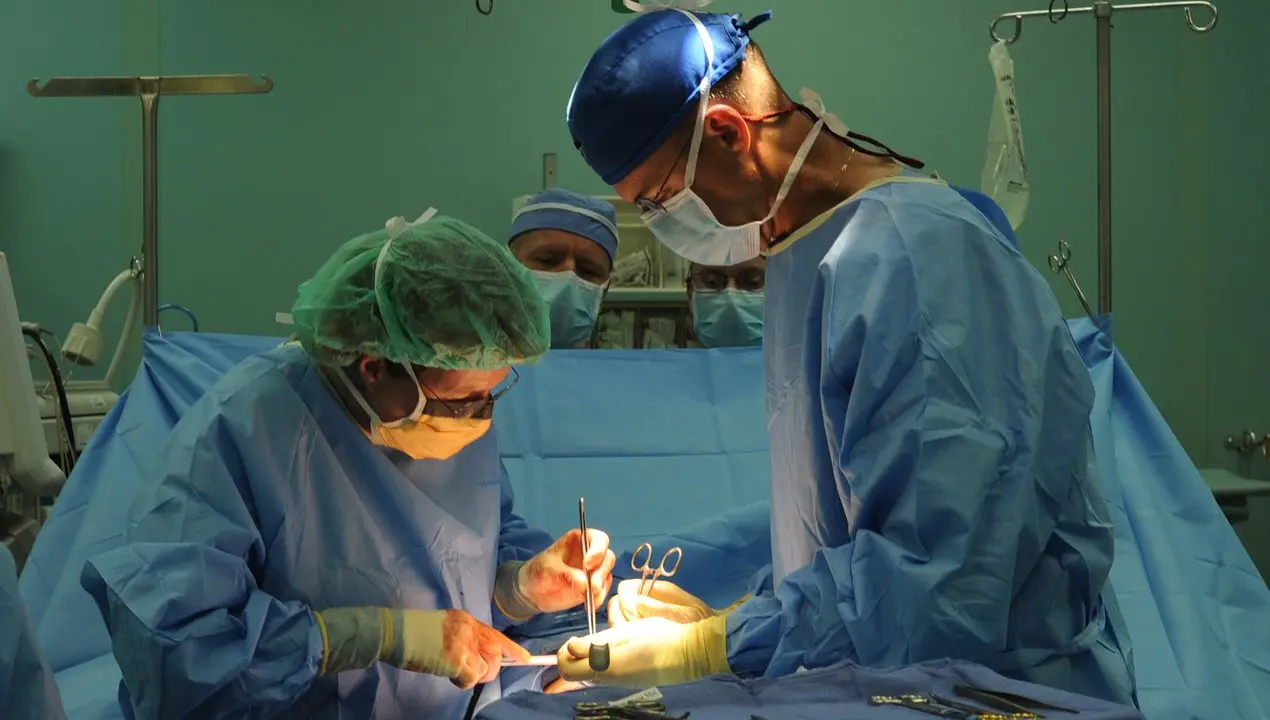
Diagram showing the position of the appendix and the path of the pain A front view of the abdomen. Pain begins at the navel and shifts to the lower right side, where the appendix sits, attached to the large bowel. navel large bowel appendix (lower right) pain starts near the navel then settles lower right
Simplified diagram. Note: in pregnancy and some other situations the pain can sit elsewhere.
Surgical team in theatre performing an abdominal operation through a small incision
Illustrative photograph of abdominal surgery in theatre.
1–2 days
how long a burst appendix can take to happen
3 holes
keyhole cuts used in a laparoscopic operation
1 night
most people stay, or go home next day
2–6 wks
to get back to normal activity

How it is treated

Appendicitis is treated by removing the appendix. There is no medicine that reliably settles it.

1 Assessment first

Blood tests, an examination, and usually an ultrasound or a CT scan. Not every pain in the lower right is the appendix — urine infections, ovarian problems and bowel conditions can look similar, and the scan helps tell them apart.

2 Keyhole surgery

Laparoscopic appendicectomy is now the usual approach. The surgeon makes three small cuts and uses a camera and instruments, rather than one long incision.

It generally means less pain afterwards, a shorter hospital stay and a faster return to normal than open surgery.

3 Open operation

Sometimes a single incision is the better choice — for example if there is already widespread infection, or after previous abdominal operations. It is not a failure; it is the safer choice for that person on that day. Your surgeon will explain why.
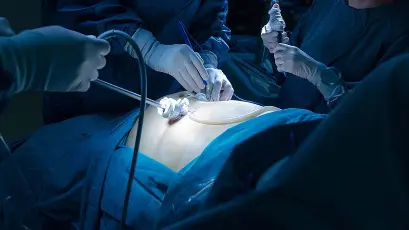
Close view of a keyhole surgical field during an abdominal operation
Illustrative photograph of a keyhole abdominal operation.

Recovery

Most people go home the same evening or the next morning. You will be walking within hours of the operation, and the small keyhole cuts need only a light dressing. Expect some shoulder-tip discomfort for a day or two — that is trapped wind from the operation, and it settles.

Most people return to work and normal activity within two to six weeks, depending on how demanding their work is and whether the appendix had burst. If it had burst, recovery is longer and you may need antibiotics as well.

Removing the appendix does not cause any long-term digestive problem. It does not affect bowel movement or the absorption of food.

Go to hospital now if…

Lower right abdominal pain with a fever
Pain spreading to the whole belly, or a rigid, board-like tummy
Vomiting with worsening pain
You have not passed wind or stool for a day or more, with vomiting
Fainting, confusion, or a racing pulse with abdominal pain
Any abdominal pain in pregnancy, or a child, with vomiting — get it checked promptly

Call 87478 74666 or go to the nearest emergency department. On the way in, do not eat or drink.

Common questions

Can I wait and see if it settles?

No. Appendicitis can perforate within a day or two, and a burst appendix is far more serious than an early one. If you think it might be appendicitis, be seen the same day.

Should I stop eating and drinking?

Yes, if you think appendicitis is possible and you are on your way to hospital. An empty stomach makes an anaesthetic safer, in case you need an operation. Take any regular medicines with you.

Keyhole or open — which is better?

Keyhole surgery is the usual choice because it tends to mean less pain, a shorter stay and a quicker recovery. Sometimes open surgery is safer, for instance if the appendix has burst or you have had previous abdominal operations. Your surgeon will decide based on what they find.

How long until I am back to normal?

Most people are home within a day and back to ordinary activity in two to six weeks. Allow longer if the appendix had burst, as you may need a course of antibiotics.

Will I have problems without an appendix?

No. The appendix has no known useful role, and removing it does not affect digestion, bowel movement or absorbing food.

Can antibiotics treat it instead?

Antibiotics alone are only an option in selected uncomplicated cases, and many people relapse afterwards. Surgery is the reliable treatment, which is why it is usually recommended.

Banner image representing appendix surgery care
Illustrative image for appendix surgery.

Think it might be your appendix?

Appendicitis is one of the conditions where early treatment makes the biggest difference. If the pain is there now, do not wait for it to settle.

Call 87478 74666 Book an appointment

Medically reviewed by: the medical team, Dhaara Speciality Hospital, Yelahanka, Bengaluru.

Last updated: 1 October 2026

This page is written to help you understand what is going on. It is general information, not personal medical advice, and it cannot replace a consultation. Please talk to the treating clinician about your own situation.

Meet Our Surgeons

Get acquainted with our skilled surgical team, dedicated to delivering compassionate and expert care.

Words From Our Happy Clients

Glowing testimonials from satisfied clients share their positive experiences.

Dhaara Speciality Hospital is a trusted healthcare institution equipped with state-of-the-art facilities and a team of skilled surgeons, including specialists in laparoscopic procedures. Choosing Dhaara for your laparoscopic gallbladder surgery comes with several advantages.

More Reviews