Advanced Colonoscopy at Dhaara Hospital Yelahanka. Early detection of colon cancer, polyps & IBD by Dr. Srinivas Bojanapu. Painless, same-day procedure. Call 87478 74666.
10,000+
Patients Treated
15+ Years
Surgical Experience
24/7
Emergency Care
Key Takeaways
- Colonoscopy is a 20–40 minute day-care procedure that directly views the entire large intestine.
- It is the gold-standard test to detect colon polyps and prevent colon cancer — polyps can be removed during the same procedure.
- At Dhaara, colonoscopy is done under sedation, so most patients sleep through it and remember nothing.
- You can go home the same day and resume normal food and activity within 24 hours.
What is a Colonoscopy?
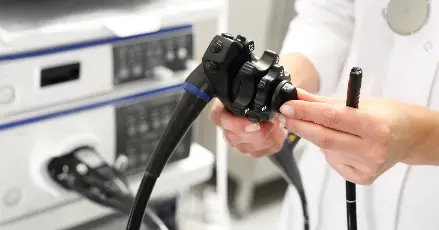
A colonoscopy is a detailed examination of the entire large intestine (colon) and rectum using a long, flexible camera called a colonoscope. It is the gold standard for detecting colon cancer in its early stages — when it is most treatable — as well as diagnosing conditions like inflammatory bowel disease, polyps, unexplained bleeding and chronic diarrhoea.
At Dhaara Speciality Hospital, colonoscopies are performed by Dr. Srinivas Bojanapu, an experienced Surgical Gastroenterologist. We use state-of-the-art high-definition colonoscopes in a dedicated, sterile endoscopy suite.
Why is Colonoscopy Important?
Colorectal cancer is one of the most common cancers in India and is rapidly increasing due to changing dietary habits. The good news is that it is largely preventable with regular colonoscopy screening. Colonoscopy can detect pre-cancerous polyps and remove them before they ever become cancer.
In India, doctors recommend colonoscopy screening starting at age 45 for average-risk individuals, and earlier if you have a family history of colon cancer or symptoms.
When is Colonoscopy Recommended?
- Blood in stools (rectal bleeding) or dark, tarry stools
- Chronic diarrhoea or constipation lasting more than 3 weeks
- Unexplained abdominal cramps or bloating
- Unexplained iron-deficiency anaemia
- Significant unintentional weight loss
- Family history of colorectal cancer or polyps
- Personal history of inflammatory bowel disease (Crohn's, ulcerative colitis)
- Routine colorectal cancer screening (age 45+)
- Follow-up after previous polyp removal
What Conditions Does Colonoscopy Detect?
Colorectal Cancer
Colonoscopy is the only test that can simultaneously detect AND remove early-stage colorectal cancer and pre-cancerous polyps in a single procedure.
Inflammatory Bowel Disease
Accurate diagnosis and assessment of Crohn's disease and ulcerative colitis — guiding treatment decisions with direct visual examination and biopsy.
Colonic Polyps
Polyps are growths on the colon lining that can become cancerous over time. Colonoscopy detects and removes them in the same sitting (polypectomy).
Diverticular Disease
Diagnosis of diverticulosis (small pouches in the colon wall) and diverticulitis, and assessment of bleeding from diverticula.
How to Prepare for a Colonoscopy?
Proper bowel preparation is essential for a clear, accurate examination. Our team will give you detailed written instructions, which typically include:
- 2 days before: Shift to a low-fibre diet (no vegetables, fruits or seeds)
- 1 day before: Clear liquid diet only — water, coconut water, clear soups, fruit juices without pulp
- Bowel prep solution: A laxative preparation to completely cleanse the colon (our team will prescribe this)
- Day of procedure: Nothing by mouth for at least 4 hours before the procedure
- Medications: Continue most medications with a small sip of water; specific guidance will be given for blood thinners and diabetes medications
Therapeutic Uses of Colonoscopy
Colonoscopy at Dhaara Hospital is not just for diagnosis. Our expert team performs several treatments through the colonoscope:
- Polypectomy — removal of polyps to prevent cancer
- Haemostasis — stopping active colonic bleeding
- Biopsy — tissue sampling for accurate diagnosis
- Stricture dilatation — widening narrowed segments of the colon
- Foreign body removal — retrieval of objects from the colon
Book Colonoscopy
Expert colorectal screening at Yelahanka
📞 87478 74666 💬 WhatsApp NowRelated Services
Why Choose Dhaara Hospital for Colonoscopy?
HD Colonoscopes
Narrow-band imaging for ultra-clear polyp detection
Same-Sitting Polypectomy
Polyps removed immediately — no second procedure needed
Painless Sedation
Comfortable experience with no memory of the procedure
Dedicated Suite
Fully sterile, dedicated colonoscopy suite with trained staff
What Does a Colonoscopy Detect?
Colonoscopy gives a direct, magnified view of the lining of your entire colon and rectum. It can detect and often treat, in the same sitting:
- Polyps — small growths that can turn into colon cancer over 5–10 years
- Colorectal cancer, at its earliest and most curable stage
- Inflammatory bowel disease (ulcerative colitis, Crohn's disease)
- Diverticulosis and sources of unexplained bleeding
- Strictures (narrowing) and causes of long-standing diarrhoea or constipation
Is Colonoscopy Painful? What About Sedation?
No — at Dhaara Speciality Hospital, colonoscopy is performed under conscious sedation given by an experienced anaesthesia team. Most patients fall asleep and have no memory of the procedure. You may feel mild bloating afterwards as the air used during the exam settles; this passes within a few hours.
Patients on blood thinners, diabetics and elderly patients receive individualised instructions and monitoring — our ICU backup and 24/7 emergency team mean even high-risk patients can undergo the procedure safely.
How Should You Prepare? A Simple Checklist
- 3 days before: stop iron tablets, seeds, nuts and high-fibre foods as advised
- 1 day before: clear liquid diet — water, clear soups, coconut water, juices without pulp
- Evening & 4–6 hours before: take the prescribed bowel-preparation solution; stools should turn clear yellow
- Bring: previous reports, list of medications, and an attendant (you cannot drive after sedation)
A well-prepared colon doubles the accuracy of the examination — our team calls you beforehand to walk you through every step.
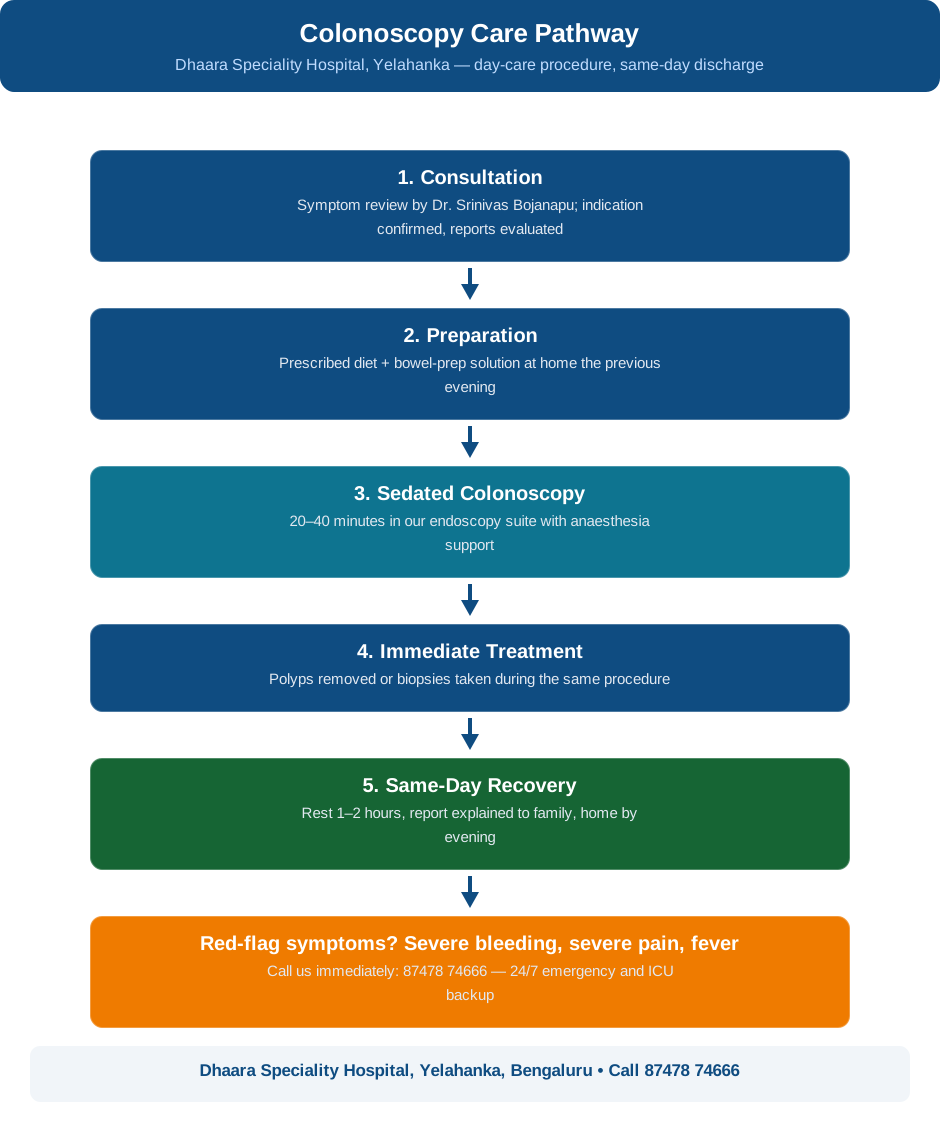
Your Colonoscopy Journey at Dhaara
Frequently Asked Questions
Book Your Consultation Today
Expert care at Dhaara Speciality Hospital, Yelahanka. Same-day appointments available.
The procedure itself takes 20–40 minutes. Including sedation and recovery observation, plan for about 3 hours at the hospital, and you go home the same day.
Yes. Most polyps are removed during the same procedure using a snare or biopsy forceps. Removing precancerous polyps is what makes colonoscopy a cancer-prevention test, not just a diagnostic one.
For average-risk adults, screening is generally recommended from age 45. If you have a family history of colon cancer or polyps, inflammatory bowel disease, or symptoms like bleeding or unexplained anaemia, your doctor may advise it earlier.
Diagnostic and therapeutic colonoscopy performed for a medical indication is typically covered under most Indian health insurance policies including cashless schemes. Our insurance desk will help verify your coverage before admission.
Costs vary with sedation, polyp removal and room category. At Dhaara Speciality Hospital Yelahanka you receive a transparent written estimate before the procedure — call 87478 74666 for details.
Words From Our Happy Clients
Glowing testimonials from satisfied clients share their positive experiences.
Dhaara Speciality Hospital is a trusted healthcare institution equipped with state-of-the-art facilities and a team of skilled surgeons, including specialists in laparoscopic procedures. Choosing Dhaara for your laparoscopic gallbladder surgery comes with several advantages.
More Reviews
Vinay T
India
Surprised at the excellent facilities
I visited Dhaara Hospital and consulted with Dr. Prathima, a fantastic gynecologist. She's professional, friendly, and listens to my concerns. Her treatment worked well for me, and she always suggests the best.
Suchetha
India
Surprised at the excellent facilities
Dr Sreenivas is brilliant. The way, he listens to the patients issue giving so much time inspite of his busy schedule. I am very happy to have met him for my mom's surgery. Best Gastro surgeon👏👏.

.webp)
.webp)