If a sudden attack of pancreatitis has brought you here — or years of recurring pain have — this page was written for you. Together we will walk through what pancreatitis is, why it happens, how it is diagnosed and treated, and how it is cared for at Dhaara Speciality Hospital, Yelahanka, by Dr. Srinivas Bojanapu, Surgical Gastroenterologist & HPB Surgeon.
Medically reviewed by Dr. Srinivas Bojanapu · September 2026
10,000+
Patients Treated
15+ Years
Surgical Experience
24/7
Emergency Care
Pancreatitis in 30 seconds
- What it is: inflammation of the pancreas — the gland deep behind your stomach that makes digestive enzymes and insulin.
- Why it happens: gallstones and alcohol cause most cases in India; high triglycerides, certain drugs and genetics account for others.
- Key symptoms: severe upper-abdominal pain boring through to the back, with vomiting — often after a heavy meal or alcohol.
- If you are worried: most attacks settle with fluids and pain control — but severe pain with fever and vomiting is an emergency, today.
- The good news: about 80% of attacks are mild — and when the cause is found and fixed, the disease usually does not return.
First, the pancreas: where it is and what it does
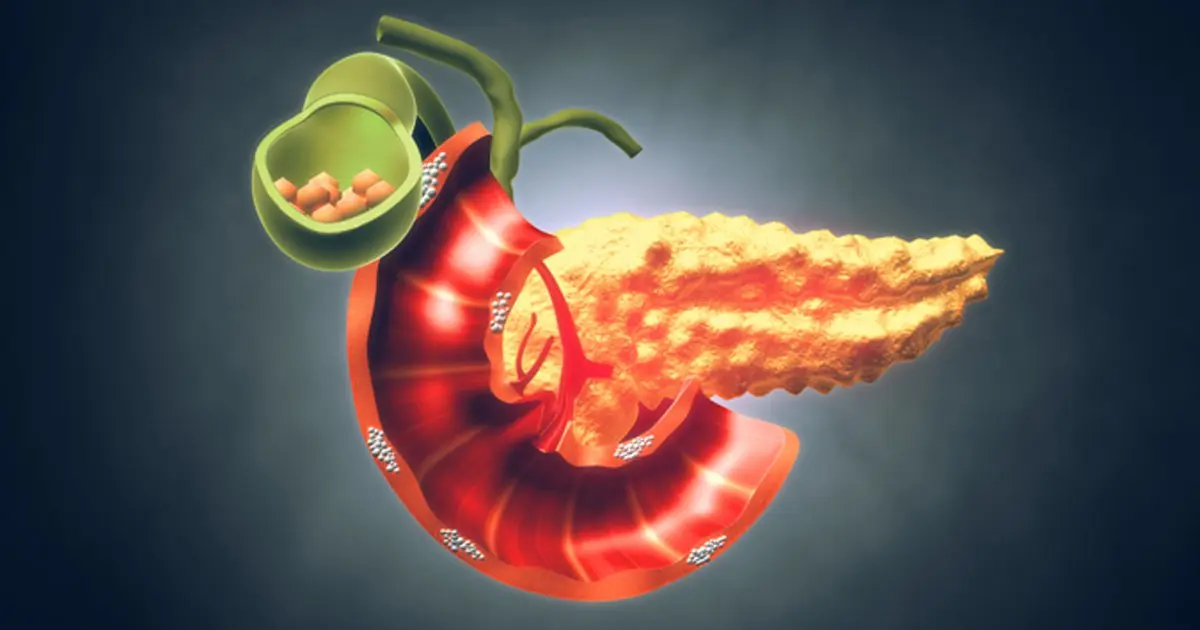
Let's meet the organ at the centre of all this. The pancreas is a soft, pale gland hidden deep behind your stomach — one of the body's elegant two-in-one designs: a factory that pours digestive enzymes into your gut, and a laboratory that doses insulin into your blood.
When the enzymes it makes activate inside the gland instead of the gut, the pancreas begins to digest itself — that, in one sentence, is pancreatitis. Understanding that single mechanism explains every symptom and every treatment on this page.
What is pancreatitis?
Pancreatitis is inflammation of the pancreas. It ranges from mild, self-limiting acute episodes, to severe life-threatening necrotising pancreatitis, to chronic disease that permanently damages the gland. The spectrum matters: each form has its own course, its own urgency, and its own plan.
| Acute pancreatitis | Chronic pancreatitis | |
|---|---|---|
| Nature | Sudden inflammation that resolves with treatment | Progressive, permanent destruction of pancreatic tissue |
| Severity | 80% mild; 20% severe and needing ICU care. Necrotising infection can be life-threatening (mortality up to 30% if infected necrosis develops) | Chronic abdominal pain, malabsorption (oily, foul-smelling stools), and diabetes over time |
| Causes | Gallstones (~50%), alcohol (~25%), high triglycerides, certain medicines, idiopathic | Alcohol (~60%), idiopathic, genetic (PRSS1, SPINK1 mutations) — and in India, Tropical Chronic Pancreatitis, which affects young non-alcoholics |
| Course | Usually one episode once the cause is fixed | Recurring pain, enzyme replacement and diabetes care long-term |
Symptoms of pancreatitis
The patterns differ sharply between the two forms — and one mechanism ties them together: a blocked duct or an irritated gland makes enzymes activate where they should not.
Acute — typical
- Severe upper-abdominal pain radiating to the back
- Pain worse after eating, relieved by leaning forward
- Nausea and vomiting
- Fever and rapid heart rate
- Abdominal tenderness and distension
- In severe cases: jaundice, shock
Chronic — typical
- Recurrent or continuous upper-abdominal pain
- Pain worse after meals and alcohol
- Weight loss despite eating
- Oily, foul-smelling, floating stools (steatorrhoea)
- Diabetes (late stage)
- Jaundice if the bile duct is blocked
Easily confused with
- Severe gastritis or a stomach ulcer
- Gallstone colic (see our gallbladder surgery page)
- Food poisoning
- Heart attack — upper-abdominal pain is sometimes cardiac, which is why first attacks belong in hospital
Emergency signs — act now
- Severe upper-abdominal pain with fever and vomiting
- Confusion, breathlessness or fainting
- Rigid, board-like abdomen
- Vomiting blood
- Severe acute pancreatitis can cause multi-organ failure — it needs ICU-level care, immediately
Here is the reassuring arithmetic: four in five attacks are mild and settle within days on simple treatment. The purpose of hospital assessment is not to frighten you — it is to find out which group you are in.
When should you see a doctor?
review
Next available appointment: recurring upper-abdominal discomfort after meals; known chronic pancreatitis needing its scheduled follow-up; fatty-food intolerance with weight loss.
(days)
Within days: a first episode of significant upper-abdominal pain that settled on its own; repeated attacks; new oily stools or new diabetes with a pancreatic history; admission advised for assessment and cause-finding.
(same day)
Do not wait: severe upper-abdominal pain with fever and vomiting — go to an emergency immediately. Call 87478 74666 — Dhaara runs a 24/7 emergency service with ICU backup.
Causes and triggers — and why they are not the same
A cause directly produces the disease; a risk factor only shifts its probability — think of it as loading dice: it changes the odds, never any single outcome for certain.
- Gallstones — around half of acute cases; a stone migrating from the gallbladder blocks the pancreatic duct
- Alcohol — around a quarter of acute cases, and the leading cause of chronic disease
- High triglycerides, certain medicines, autoimmune and genetic causes (PRSS1, SPINK1)
- Tropical chronic pancreatitis — a form seen in India, affecting young non-alcoholics
A trigger is not a blame sheet: many people with risk factors never develop pancreatitis, and some attacks have no identifiable cause at all. If alcohol is a factor, the honest frame is medical, not moral — cessation is the single most effective treatment we have.
"Is every attack dangerous?"
No — and here is the steadying truth. Most attacks are mild and settle in days with fluids and pain control. The reason even a first attack deserves hospital assessment is arithmetic, not alarm: the severe minority cannot be identified from the waiting room, and severity is established with scoring and early CT. The severe 20% do well precisely when they are recognised early — monitored fluids, nutrition support and ICU care prevent the complications that make this disease dangerous.
And the deeper reassurance: an attack is usually a messenger. It tells you a cause exists — a stone, triglycerides, a medicine — and causes can be fixed. "Find it and fix it" is the whole strategy.
How is pancreatitis diagnosed? A step-by-step journey
You will not need every test — the sequence is tailored to you. But it usually follows this order:
- Clinical assessment. The pattern of your pain, and an examination — this raises suspicion and assesses severity; it cannot measure inflammation alone.
- Blood tests. Serum lipase (or amylase) more than three times the normal level confirms acute pancreatitis. Liver tests point towards a gallstone cause; triglycerides are checked.
- Ultrasound. Looks for gallstones and bile-duct dilation — the commonest underlying cause. It cannot see the pancreas itself well, because gas hides it.
- Contrast CT abdomen. Grades severity (CT Severity Index), detects necrosis and pseudocysts — the test that tells your team which group you are in.
- MRCP. Detailed ductal anatomy without radiation — preferred in chronic pancreatitis and before definitive treatment.
- EUS where needed. Endoscopic ultrasound detects small stones, strictures and early changes.
Treatment options for pancreatitis
Acute attack — hospital care
What: aggressive IV fluids (the cornerstone — it protects the gland from necrosis), pain control, monitored fasting with early enteral nutrition, and complication screening. Why: the gland heals itself when supported; the team's job is to prevent and detect complications. Limitations: antibiotics are used only for infected necrosis — never routinely. Risks of delay: untreated severe attacks can progress to organ failure — which is why severe cases need ICU monitoring.
The definitive fix — treating the cause
What: laparoscopic gallbladder removal — usually in the same admission. Why: leaving the gallbladder means stones can strike again, and repeat attacks can be worse. When: for every gallstone pancreatitis patient fit for surgery.
Chronic pancreatitis — long-term management
What: complete alcohol cessation (the single most important intervention), pancreatic enzyme tablets for digestion, stepwise pain management, EUS-guided nerve blocks for refractory pain. Surgery — Frey or Puestow drainage procedures, or a Whipple in selected cases. Diabetes: Type 3c (pancreatogenic) diabetes needs specialist-tuned management.
Supportive care
What: nutrition planning, diabetes care and pain protocols that run alongside everything above. Why: digestion and pain are the daily reality of chronic disease. Our dieticians and Pain & Palliative Care team work with you throughout.
What happens after an attack — the usual pathway
- The attack — pain brings you to hospital
- Severity assessment — scoring, bloods and early CT place you in the mild or severe group
- Supportive care — fluids, pain control, nutrition
- Find the cause — ultrasound, MRCP, lipids, medicine and alcohol review
- Fix the cause — gallbladder surgery in the same admission for gallstone disease
- Recovery plan — diet, enzyme and diabetes advice before discharge
- Surveillance — chronic patients: periodic imaging and enzyme/diabetes review; any new symptom promptly evaluated
What is the outlook?
For acute pancreatitis: genuinely good. Most patients recover fully — and when the cause is removed, the disease usually never returns. Gallstone patients are effectively cured by gallbladder surgery; for alcohol-related disease, sustained abstinence is the cure.
For chronic pancreatitis: an honest sentence — the damage already done does not reverse, but its course is yours to slow. Pain can be controlled, digestion supported with enzymes, diabetes managed, and surgery helps selected patients. With the cause removed and the plan followed, most people live full lives. No one can promise an outcome; your team can promise you a plan.
Nutrition and daily life
During and after an acute attack
Fasting or clear liquids at first — your team decides when to restart food. Early feeding actually helps healing; many patients go home on small, low-fat, frequent meals.
Alcohol — the honest paragraph
If alcohol caused your pancreatitis, stopping permanently is the most powerful treatment on this page — more than any medicine or operation. We can support you with this; ask without embarrassment.
Enzymes and digestion
Chronic pancreatitis often needs pancreatic enzyme tablets with meals — they stop the oily stools and weight loss, and they are not optional extras. Dose adjustments are routine; tell your team what your stools are doing.
Diabetes and follow-up
Type 3c diabetes behaves differently from Type 2 — it needs specialist-tuned care. Keep your follow-up schedule even when you feel well; surveillance imaging in chronic disease is what catches change early.
Questions to ask your doctor
Before the appointment: bring all scan films/CDs (the imaging itself, not just reports), blood results, your medication list — and a family member.
- What caused my attack — and has the cause been fully identified?
- How severe was it — did any necrosis or pseudocyst develop?
- Do I need MRCP or EUS to complete the picture?
- If I have gallstones — when is my gallbladder surgery, and why the same admission?
- Do I need enzyme replacement — and how will we know the dose is right?
- What is my diabetes plan, if any?
- What follow-up schedule do I need — and what symptoms should bring me back sooner?
- If pain returns, what is the stepwise plan?
If you would like more confidence about your diagnosis or treatment plan, seeking a second opinion is reasonable.
Frequently Asked Questions
Can pancreatitis be cured completely?
Acute pancreatitis is a one-time episode in most cases — treat the episode, remove the cause (for example, gallbladder surgery for gallstone pancreatitis) and it does not recur. Chronic pancreatitis cannot be cured, but progression can be slowed, pain managed, and complications treated effectively.
What foods should I avoid with pancreatitis?
During acute episodes: complete fasting or clear liquids only, as advised by your team. Long-term: avoid alcohol completely, limit fat intake — especially fried, fatty foods — avoid large meals, eat small frequent meals, and avoid smoking. A high-fibre, low-fat diet is recommended.
Does pancreatitis lead to cancer?
Chronic pancreatitis is associated with a modestly increased risk of pancreatic cancer (approximately 2–3% over 20 years, versus 0.5% in the general population). Long-standing chronic pancreatitis warrants periodic surveillance with CT or EUS, and any new symptoms or weight loss should be promptly evaluated.
Is pancreatitis life-threatening?
About 80% of attacks are mild and settle in days. Severe necrotising pancreatitis can be life-threatening — which is why severity scoring and access to ICU care matter. Dhaara provides monitored inpatient care with multidisciplinary support.
Why remove the gallbladder if the pancreas was the problem?
In gallstone pancreatitis, stones migrating from the gallbladder triggered the attack. Leaving it means stones can slip again — recurrence is common and can be more severe. Keyhole removal, usually in the same admission, is the definitive prevention.
What diet should I follow after pancreatitis?
During recovery: low-fat, small frequent meals, and no alcohol — permanently, if alcohol caused the attack. Gallstone patients can eat normally after gallbladder surgery, with moderation on fatty foods. Our dieticians give you a specific plan at discharge.
What is the difference between pancreatitis and pancreatic cancer?
Pancreatitis is inflammation — painful but usually non-cancerous. Long-standing chronic pancreatitis does raise cancer risk slightly, which is why chronic patients get periodic imaging review. New painless jaundice or weight loss always needs urgent evaluation. Our pancreatic cancer page covers this in depth.
How Dhaara Speciality Hospital can help
And if you need us, here is what stands ready for you under one roof in Yelahanka, Bangalore:
- Acute attack management — aggressive fluid protocols, analgesia and complication screening, with ICU and critical care for severe attacks
- Finding the cause — ultrasound, MRCP, lipid and metabolic assessment
- Laparoscopic gallbladder surgery — usually within the same admission for gallstone pancreatitis, see gallbladder surgery
- Chronic pancreatitis programme — pain protocol, enzyme replacement, diabetes management, and surgery for refractory cases
- Nutrition and palliative support — see Pain & Palliative Care
- 24/7 emergency and critical care

Dr. Srinivas Bojanapu
MBBS, MS, FACRSI, DrNB, PDF — Surgical Gastroenterologist & HPB Surgeon with 16+ years of experience and 5,000+ procedures.
Medically reviewed by Dr. Srinivas Bojanapu — MBBS, MS, FACRSI, DrNB, PDF · Surgical Gastroenterologist & HPB Surgeon · Last updated: September 2026.
This page provides general information and is not a substitute for personal medical advice, diagnosis or treatment. Treatment decisions are always individualised after clinical assessment.
Sources & standards:
- Institutional figures on this page (patients treated, surgical experience) are based on Dhaara Hospital records.
- Management of acute and chronic pancreatitis follows internationally accepted clinical guidance, including severity-based management of acute pancreatitis.
Book Your Consultation
Have you had an attack — or do attacks keep returning? Discuss the cause, and its definitive fix, with Dr. Srinivas Bojanapu at Dhaara Speciality Hospital, Yelahanka.
Words From Our Happy Clients
Glowing testimonials from satisfied clients share their positive experiences.
Dhaara Speciality Hospital is a trusted healthcare institution equipped with state-of-the-art facilities and a team of skilled surgeons, including specialists in laparoscopic procedures. Choosing Dhaara for your laparoscopic gallbladder surgery comes with several advantages.
More Reviews
Vinay T
India
Surprised at the excellent facilities
I visited Dhaara Hospital and consulted with Dr. Prathima, a fantastic gynecologist. She's professional, friendly, and listens to my concerns. Her treatment worked well for me, and she always suggests the best.
Suchetha
India
Surprised at the excellent facilities
Dr Sreenivas is brilliant. The way, he listens to the patients issue giving so much time inspite of his busy schedule. I am very happy to have met him for my mom's surgery. Best Gastro surgeon👏👏.

.webp)
.webp)