Tooth-coloured composite fillings in Yelahanka, Bangalore — natural-looking cavity restoration at Dhaara Speciality Hospital.
10,000+
Patients Treated
15+ Years
Surgical Experience
24/7
Emergency Care
Key Takeaways
- A filling stops a small cavity from becoming a root canal — early treatment is the cheapest dentistry you'll ever buy.
- Modern composite fillings are tooth-coloured, mercury-free and bonded — indistinguishable in your smile.
- A standard filling takes 20–40 minutes in a single visit under local anaesthesia.
- Sensitivity to sweets or a visible dark spot are early cavity signs — do not wait for pain.
Cavities Are a Countdown, Not a Coincidence
Tooth decay progresses predictably: enamel pit → dentin spread → pulp infection → root canal or extraction. The window for a simple filling is exactly at the start — when the tooth only twinges with sweets or shows a brown spot. Once pain becomes spontaneous and throbbing, the nerve is involved and costs multiply. Six-monthly checkups exist precisely to catch cavities in that cheap window.
What Getting a Filling is Like Today
- Local anaesthesia first — you feel vibration, not pain
- Decay removed gently; cavity disinfected
- Composite resin layered and light-cured, then polished to match your bite
- Total chair time: 20–40 minutes; eating after the numbness wears off
Your Filling Journey at Dhaara
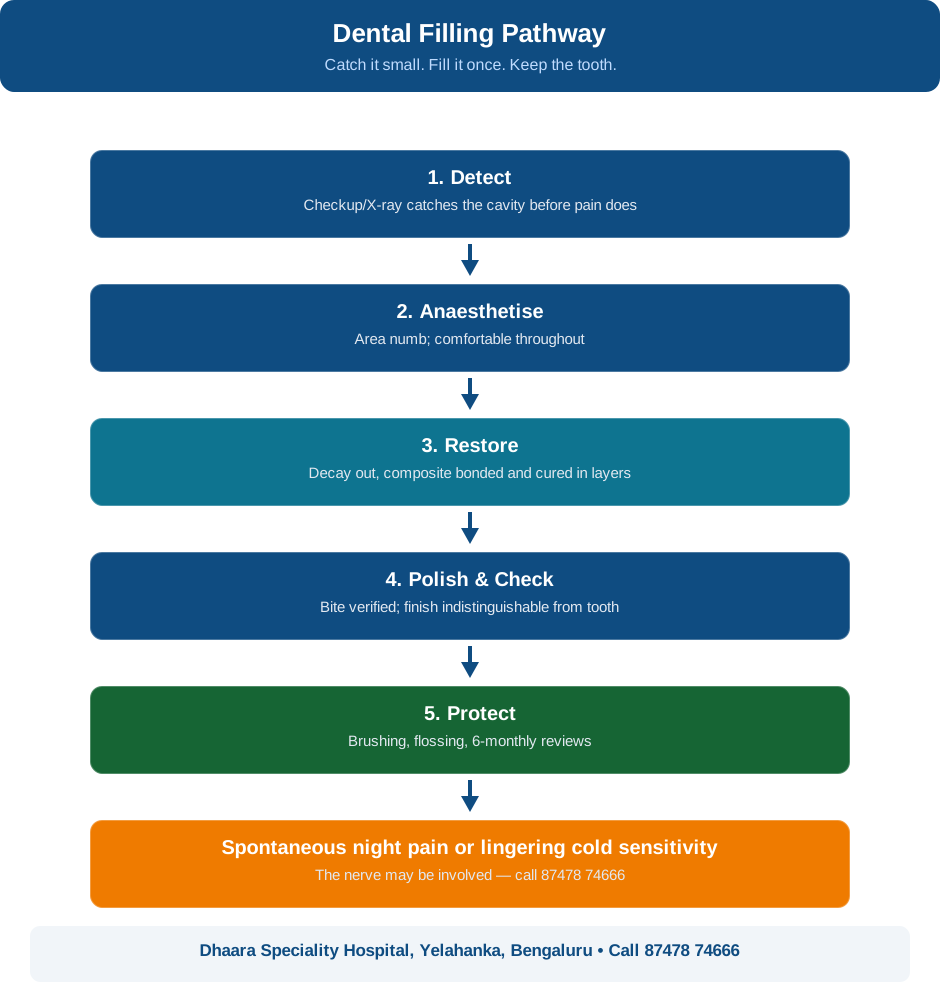

Frequently Asked Questions
For most cavities yes — we numb comfortably so the treatment is painless. Very shallow enamel-only fillings may not need it; you will feel nothing without it either way.
Typically 7–10+ years with good hygiene and normal bite forces. Large fillings on heavily-loaded molars may need earlier replacement — we monitor them at every checkup.
Amalgam works but is grey, requires more tooth-cutting, and contains mercury (controversial cosmetically though considered safe functionally). Composite is tooth-matched, tooth-preserving and today's standard.
No. The cavity underneath progresses quickly without the seal, and food packing damages the tooth. Re-cementing or refilling promptly is quick and cheap; waiting risks the nerve.
Depends how much tooth remains: small breaks fill well; large fractures involving cusps need crowns for strength. We assess and explain the honest boundary at consultation.
Cavities Are a Countdown, Not a Coincidence
Tooth decay progresses predictably: enamel pit → dentin spread → pulp infection → root canal or extraction. The window for a simple filling is exactly at the start — when the tooth only twinges with sweets or shows a brown spot. Once pain becomes spontaneous and throbbing, the nerve is involved and costs multiply. Six-monthly checkups exist precisely to catch cavities in that cheap window.
What Getting a Filling is Like Today
- Local anaesthesia first — you feel vibration, not pain
- Decay removed gently; cavity disinfected
- Composite resin layered and light-cured, then polished to match your bite
- Total chair time: 20–40 minutes; eating after the numbness wears off
Your Filling Journey at Dhaara
Frequently Asked Questions
For most cavities yes — we numb comfortably so the treatment is painless. Very shallow enamel-only fillings may not need it; you will feel nothing without it either way.
Typically 7–10+ years with good hygiene and normal bite forces. Large fillings on heavily-loaded molars may need earlier replacement — we monitor them at every checkup.
Amalgam works but is grey, requires more tooth-cutting, and contains mercury (controversial cosmetically though considered safe functionally). Composite is tooth-matched, tooth-preserving and today's standard.
No. The cavity underneath progresses quickly without the seal, and food packing damages the tooth. Re-cementing or refilling promptly is quick and cheap; waiting risks the nerve.
Depends how much tooth remains: small breaks fill well; large fractures involving cusps need crowns for strength. We assess and explain the honest boundary at consultation.
Small Cavities, Simple Fix
A filling restores a tooth damaged by decay or minor fracture, stopping the cavity from growing. We use composite resin — tooth-coloured material that bonds to the tooth and blends in completely. Silver (amalgam) fillings are a thing of the past for most patients.
Signs You May Need a Filling
- Tooth sensitivity to sweet, hot or cold
- A visible dark spot or hole in a tooth
- Food getting stuck between the same teeth repeatedly
- A rough or chipped edge you can feel with your tongue
What to Expect
- The tooth is numbed; decay is gently removed
- The cavity is filled in layers with composite and cured with a special light
- Bite is checked and polished — done in one visit, usually 20–40 minutes
Book Your Consultation Today
Dhaara Speciality Hospital, Yelahanka. Same-day appointments available.
Words From Our Happy Clients
Glowing testimonials from satisfied clients share their positive experiences.
Dhaara Speciality Hospital is a trusted healthcare institution equipped with state-of-the-art facilities and a team of skilled surgeons, including specialists in laparoscopic procedures. Choosing Dhaara for your laparoscopic gallbladder surgery comes with several advantages.
More Reviews
Vinay T
India
Surprised at the excellent facilities
I visited Dhaara Hospital and consulted with Dr. Prathima, a fantastic gynecologist. She's professional, friendly, and listens to my concerns. Her treatment worked well for me, and she always suggests the best.
Suchetha
India
Surprised at the excellent facilities
Dr Sreenivas is brilliant. The way, he listens to the patients issue giving so much time inspite of his busy schedule. I am very happy to have met him for my mom's surgery. Best Gastro surgeon👏👏.

.webp)
.webp)