Root canal treatment in Yelahanka, Bangalore — single-visit RCT options, painless technique, and crown fitting at Dhaara Speciality Hospital.
10,000+
Patients Treated
15+ Years
Surgical Experience
24/7
Emergency Care
Key Takeaways
- A root canal saves your natural tooth — extraction should be the last resort, not the first offer.
- Modern RCT with local anaesthesia is painless; most teeth finish in 1–2 visits.
- Deep cavity, cracked tooth or repeated filling on the same tooth are the usual triggers.
- A crown after RCT protects the treated tooth for years — skipping it risks fracture.
How Do You Know You Need a Root Canal?
- Throbbing toothache that wakes you at night or lingers after hot/cold
- Pain on biting or a tooth that feels 'high'
- Swelling of the gum near a tooth, sometimes with a small boil (abscess)
- Darkening of a tooth after an old injury or large filling
Why Save the Tooth Instead of Removing It?
Nothing chews like your own tooth. Extraction starts a chain: drifting neighbours, bite collapse, bone loss and eventually costlier replacement (implant/bridge) anyway. A properly root-canaled and crowned tooth functions for decades at a fraction of that lifetime cost. Our dentists recommend removal only when the tooth truly cannot be saved — and tell you honestly when that is the case.
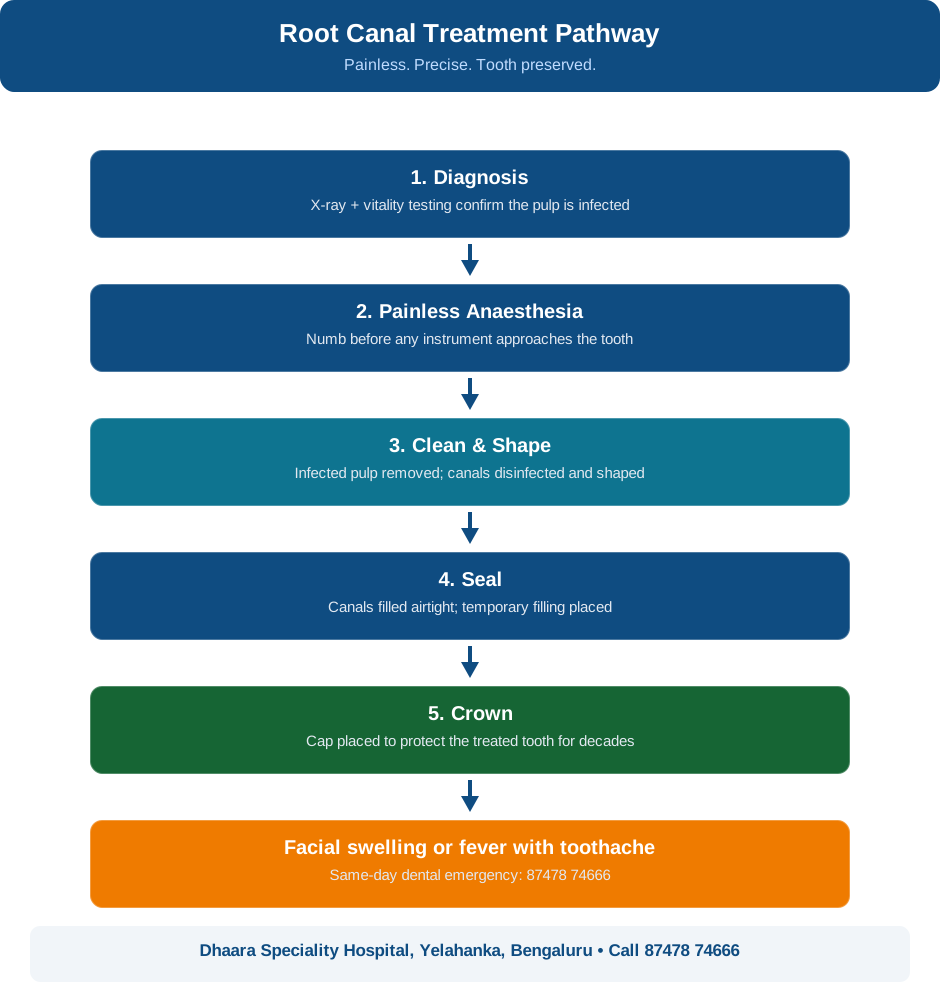
Your Root Canal Journey at Dhaara

Frequently Asked Questions
With modern local anaesthesia, the procedure itself is painless — most patients say the anticipation was worse than the treatment. Mild soreness for 2–3 days afterwards settles with routine painkillers.
Most teeth finish in 1–2 visits of 30–45 minutes. Severely infected or curved-canalled teeth may need a third visit. We plan and tell you the schedule upfront.
A root-canaled tooth loses moisture and structural strength — without a crown it can crack, sometimes beyond repair. A crown converts it into a tooth you can chew on for decades.
Rarely (5–10%). Failures come from missed canals, incomplete sealing or new decay — retreatment or a minor apicoectomy usually saves the tooth. We review treated teeth at follow-up rather than assuming success.
Extraction looks cheaper today and costs more over a lifetime — replacement (implant/bridge) plus the bite consequences exceed RCT-plus-crown. We show you the honest maths at consultation.
How Do You Know You Need a Root Canal?
- Throbbing toothache that wakes you at night or lingers after hot/cold
- Pain on biting or a tooth that feels 'high'
- Swelling of the gum near a tooth, sometimes with a small boil (abscess)
- Darkening of a tooth after an old injury or large filling
Why Save the Tooth Instead of Removing It?
Nothing chews like your own tooth. Extraction starts a chain: drifting neighbours, bite collapse, bone loss and eventually costlier replacement (implant/bridge) anyway. A properly root-canaled and crowned tooth functions for decades at a fraction of that lifetime cost. Our dentists recommend removal only when the tooth truly cannot be saved — and tell you honestly when that is the case.
Your Root Canal Journey at Dhaara
Frequently Asked Questions
With modern local anaesthesia, the procedure itself is painless — most patients say the anticipation was worse than the treatment. Mild soreness for 2–3 days afterwards settles with routine painkillers.
Most teeth finish in 1–2 visits of 30–45 minutes. Severely infected or curved-canalled teeth may need a third visit. We plan and tell you the schedule upfront.
A root-canaled tooth loses moisture and structural strength — without a crown it can crack, sometimes beyond repair. A crown converts it into a tooth you can chew on for decades.
Rarely (5–10%). Failures come from missed canals, incomplete sealing or new decay — retreatment or a minor apicoectomy usually saves the tooth. We review treated teeth at follow-up rather than assuming success.
Extraction looks cheaper today and costs more over a lifetime — replacement (implant/bridge) plus the bite consequences exceed RCT-plus-crown. We show you the honest maths at consultation.
Saving Your Natural Tooth
A root canal treats infection or inflammation deep inside a tooth — in the pulp, where the nerve and blood vessels live. Deep decay, a cracked tooth or repeated dental work are the usual reasons. The infected pulp is removed, the canals are cleaned, disinfected and sealed, and the tooth is restored — usually with a crown. The tooth stays in your mouth, which is always better than extraction when possible.
When Is a Root Canal Needed?
- Throbbing toothache, especially on biting or with hot/cold sensitivity that lingers
- Swelling of the gum near a tooth, or a recurring gum boil (abscess)
- A tooth that has fractured close to the nerve
- Deep decay reaching the pulp on examination or X-ray
What Happens During the Procedure
- The tooth is numbed — modern anaesthesia makes the procedure comfortable
- A small access opening is made; canals are cleaned and shaped with fine instruments
- Canals are disinfected and filled with a biocompatible sealing material
- A crown is placed to protect the treated tooth for the long term
Book Your Consultation Today
Dhaara Speciality Hospital, Yelahanka. Same-day appointments available.
Words From Our Happy Clients
Glowing testimonials from satisfied clients share their positive experiences.
Dhaara Speciality Hospital is a trusted healthcare institution equipped with state-of-the-art facilities and a team of skilled surgeons, including specialists in laparoscopic procedures. Choosing Dhaara for your laparoscopic gallbladder surgery comes with several advantages.
More Reviews
Vinay T
India
Surprised at the excellent facilities
I visited Dhaara Hospital and consulted with Dr. Prathima, a fantastic gynecologist. She's professional, friendly, and listens to my concerns. Her treatment worked well for me, and she always suggests the best.
Suchetha
India
Surprised at the excellent facilities
Dr Sreenivas is brilliant. The way, he listens to the patients issue giving so much time inspite of his busy schedule. I am very happy to have met him for my mom's surgery. Best Gastro surgeon👏👏.

.webp)
.webp)