Expert PCOS treatment in Yelahanka by Dr. Prathima Srinivas. Hormonal management, weight loss, fertility treatment. Call 87478 74666.
10,000+
Patients Treated
15+ Years
Surgical Experience
24/7
Emergency Care
Key Takeaways
- PCOS affects roughly 1 in 5 Indian women of reproductive age — irregular cycles, weight gain, acne, excess hair.
- It is managed, not 'cured' — but with the right plan cycles regularise, fertility is achievable and diabetes risk drops.
- Lifestyle change is genuine first-line medicine; drugs support it, not replace it.
- PCOS is a long-term metabolic condition — periodic sugar/lipid checks protect your future health.
What is PCOS?
Polycystic Ovary Syndrome (PCOS) — also called PCOD (Polycystic Ovarian Disease) in India — is one of the most common hormonal disorders affecting women of reproductive age, with an estimated 20% of Indian women affected. Despite the name, not all women with PCOS have cysts on their ovaries. The core problem is a hormonal imbalance — elevated levels of androgens (male hormones) and disrupted ovulation — that leads to a wide range of symptoms affecting menstrual health, fertility, metabolism and overall well-being.
The reassuring truth is that PCOS is manageable. At Dhaara Speciality Hospital, Dr. Prathima Srinivas takes a holistic, individualised approach to PCOS treatment — addressing not just the symptoms but the underlying metabolic and hormonal causes.
Symptoms of PCOS
Menstrual Symptoms
- Irregular or absent periods (oligomenorrhoea / amenorrhoea)
- Heavy periods when they do occur
- Long cycles (35+ days)
- Fewer than 8 periods per year
Hormonal / Androgen Symptoms
- Hirsutism — excess hair on face, chest, back or abdomen
- Acne — persistent, especially on the jawline and chin
- Oily skin and scalp
- Hair thinning or male-pattern baldness
Metabolic Symptoms
- Weight gain — especially around the abdomen
- Difficulty losing weight despite exercise
- Acanthosis nigricans (darkening of skin in armpits or neck)
- Fatigue and sleep disturbances
Fertility & Reproductive
- Difficulty getting pregnant (anovulatory infertility)
- Recurrent early miscarriages
- Higher risk of gestational diabetes if pregnancy is achieved
Diagnosis of PCOS
PCOS is diagnosed using the Rotterdam criteria — a patient needs to meet at least 2 of the following 3 criteria:
- Irregular or infrequent ovulation (evidenced by irregular periods)
- Clinical or biochemical signs of excess androgens (hirsutism, acne, or elevated testosterone on blood test)
- Polycystic ovaries on ultrasound — 12 or more small follicles in either ovary
At Dhaara Hospital, our work-up includes pelvic ultrasound, hormonal blood tests (FSH, LH, AMH, testosterone, prolactin, thyroid, fasting insulin and glucose), and a thorough clinical assessment.
PCOS Treatment at Dhaara Hospital
1. Lifestyle Modification (The Foundation)
Even a 5–10% reduction in weight can restore regular ovulation in overweight women with PCOS, reduce androgen levels and improve insulin resistance. Our dietitian creates customised low-glycaemic-index (low-GI) meal plans, and we guide you through a structured exercise programme.
2. Hormonal Treatment for Menstrual Regulation
- Combined oral contraceptive pills to regularise periods and reduce androgen effects
- Cyclic progesterone to induce withdrawal bleeds and protect the uterine lining
- Anti-androgens (spironolactone) for hirsutism and acne
3. Insulin Sensitisers
Metformin reduces insulin resistance — the underlying metabolic driver of PCOS. It can restore ovulation, regularise periods, reduce androgen levels and help with weight loss. We use it as a cornerstone treatment in women with insulin resistance.
4. Fertility Treatment for PCOS
- Ovulation induction with letrozole or clomiphene citrate
- Follicle monitoring with serial ultrasound (follicular tracking)
- Trigger injection and timed intercourse or IUI
- Laparoscopic ovarian drilling — a minimally invasive surgical option for women who don't respond to medications
5. Long-Term Health Monitoring
PCOS is associated with long-term risks of Type 2 diabetes, cardiovascular disease and endometrial cancer. At Dhaara Hospital, we include annual screening for these conditions as part of our PCOS management programme.
What PCOS Actually Is (and Isn't)
PCOS is a hormonal pattern: irregular or absent ovulation plus elevated male-pattern hormones, often with insulin resistance. It is not a disease of the ovaries alone — it is a whole-body metabolic condition. Which also means the levers that change it most powerfully are metabolic: weight, activity, sleep and diet composition — with medicines (cycle regulation, metformin, ovulation induction) layered on top.
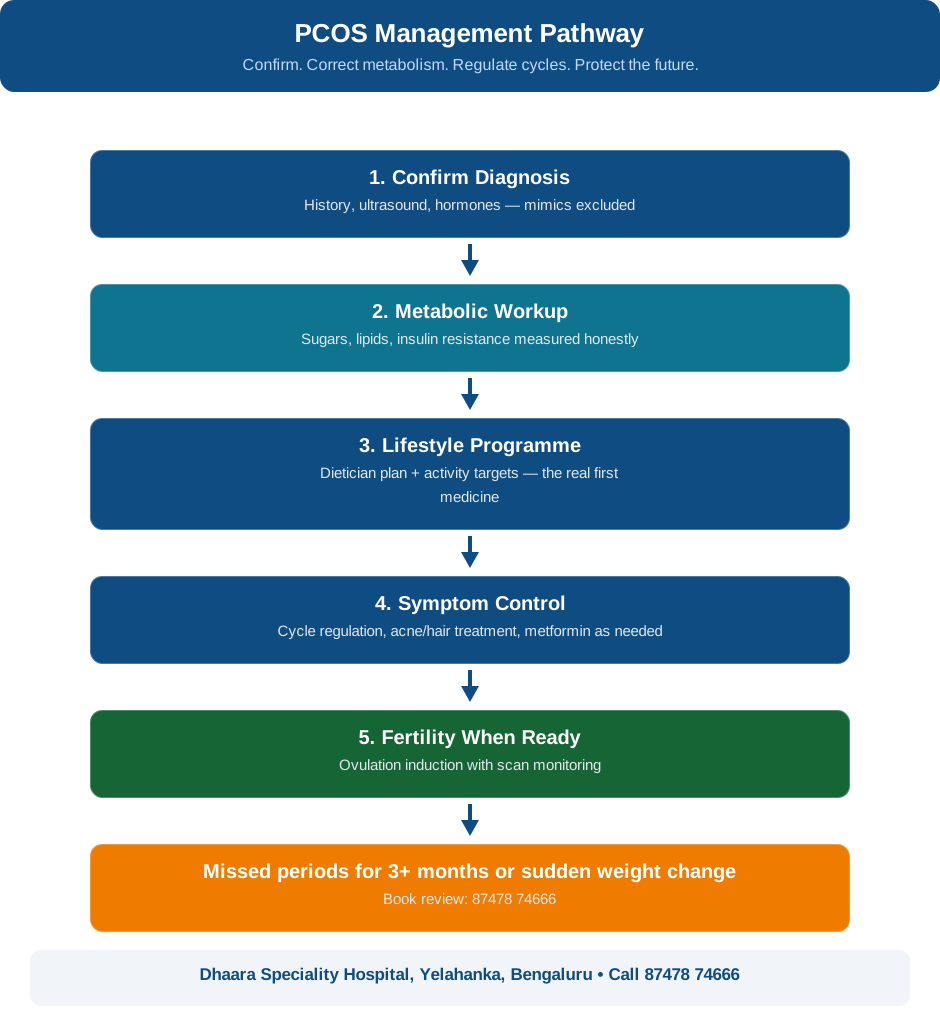
The Dhaara PCOS Programme
- Confirm the diagnosis: cycle pattern, ultrasound, hormone profile — excluding thyroid and other mimics
- Metabolic correction: dietician-designed Indian diet, activity prescription, metformin where indicated
- Cycle control: protect the lining, regularise withdrawal cycles
- Fertility support: ovulation induction with monitoring when you're ready to conceive
- Long-term health: annual sugar/lipid/BP screening — PCOS raises diabetes risk several-fold
Your PCOS Plan at Dhaara
Frequently Asked Questions About PCOS
Book Your Consultation Today
Expert care at Dhaara Speciality Hospital, Yelahanka. Same-day appointments available.
Weight correction (even 5–10%) can restore regular ovulation in many women and effectively quiets the condition — but the tendency remains and needs maintenance. Thin women get PCOS too; treatment is individualised, never one formula.
Yes — PCOS is one of the most treatable causes of infertility. Most women conceive with lifestyle correction plus ovulation induction; a minority need advanced reproductive help. Age and tubal/other factors matter, which is why evaluation is personalised.
They're used interchangeably in India. The accurate term is PCOS (polycystic ovary syndrome) — a hormonal-metabolic syndrome; 'PCOD' is the older colloquial label for the same spectrum.
Metformin in PCOS works on insulin resistance itself — improving cycle regularity and response to ovulation drugs even when fasting sugar looks normal. It is a metabolic treatment, not merely a diabetes drug.
Long stretches without ovulation can thicken the uterine lining, raising endometrial cancer risk over years if never shed. That is precisely why we keep cycles regulated — it is protective, not cosmetic.
Words From Our Happy Clients
Glowing testimonials from satisfied clients share their positive experiences.
Dhaara Speciality Hospital is a trusted healthcare institution equipped with state-of-the-art facilities and a team of skilled surgeons, including specialists in laparoscopic procedures. Choosing Dhaara for your laparoscopic gallbladder surgery comes with several advantages.
More Reviews
Vinay T
India
Surprised at the excellent facilities
I visited Dhaara Hospital and consulted with Dr. Prathima, a fantastic gynecologist. She's professional, friendly, and listens to my concerns. Her treatment worked well for me, and she always suggests the best.
Suchetha
India
Surprised at the excellent facilities
Dr Sreenivas is brilliant. The way, he listens to the patients issue giving so much time inspite of his busy schedule. I am very happy to have met him for my mom's surgery. Best Gastro surgeon👏👏.

.webp)
.webp)