Expert normal delivery care in Yelahanka by Dr. Prathima Srinivas. Active birth support, pain relief options, water birthing guidance, NICU on standby.
10,000+
Patients Treated
15+ Years
Surgical Experience
24/7
Emergency Care

Key Takeaways
- Normal delivery is our default approach — caesarean is recommended only when medically indicated.
- Painless (epidural) labour is available 24/7 on request by our anaesthesia team.
- Continuous fetal monitoring, labour progress charts and a written birth plan keep everyone aligned.
- Skin-to-skin bonding, early breastfeeding and rooming-in are standard practice here.
Painless Labour: How the Epidural Works
An epidural places a tiny catheter in your lower back through which pain-relieving medicine is given continuously — you stay awake, comfortable and able to push effectively. It does not slow a well-progressing labour and is safe for the baby. It can be requested at any point in active labour; our anaesthetists are available round the clock, so you do not have to 'time your pain' with office hours.
Our Commitment to a Safe Normal Delivery
- Honest counselling about your individual chances — no hidden agendas either way
- Partograph-based labour monitoring; immediate recourse to caesarean only for genuine indications
- Led by Dr. Prathima Srinivas with 24/7 obstetric, anaesthesia and paediatric cover
- Respectful maternity care: your birth companion stays with you
Your Labour Journey at Dhaara
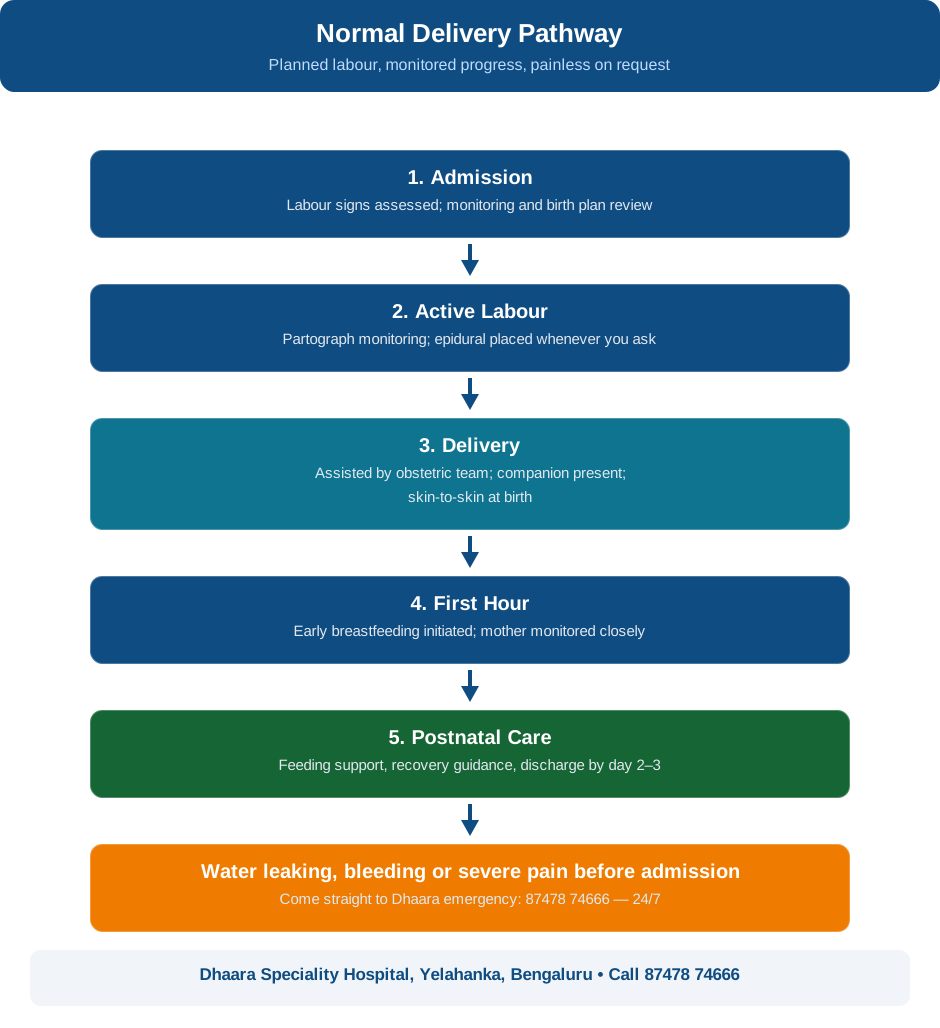
Our Philosophy: Safe, Supported, Natural Birth
At Dhaara Speciality Hospital, we believe every woman deserves a respectful, safe, and supported birth experience. Our maternity team, led by Dr. Prathima Srinivas (Obstetrician, Gynecologist & Laparoscopic Surgeon), provides expert care throughout labour with the goal of achieving a safe vaginal delivery for every eligible mother — while having the full surgical backup of an experienced surgical team when needed.
When is Normal Delivery Possible?
- Singleton pregnancy (single baby)
- Baby in vertex (head-down) position at term
- No placenta previa or major uterine abnormalities
- Normal fetal heart rate patterns during labour
- Adequate pelvis size (assessed clinically)
- No active maternal medical conditions contraindicating vaginal delivery
- Previous C-section: VBAC (Vaginal Birth After Caesarean) is possible in select patients — discuss with your doctor
Signs of Labour: When to Come to Hospital
Come Immediately
- Regular contractions: 5 mins apart, lasting 60 secs, for 1 hour
- Water breaking (rupture of membranes) — any time, with or without contractions
- Reduced fetal movements
- Bleeding (more than bloody show)
- Severe headache, blurred vision (preeclampsia signs)
Early Labour — Stay Home Comfortable
- Irregular, mild contractions (early latent phase)
- Bloody show (mucus plug with blood streaks) without heavy bleeding
- Mild backache
- Nesting instinct / burst of energy
Call us anytime if you are unsure — our team is available 24/7.
The Three Stages of Labour
Pain Relief Options During Labour
- Epidural analgesia: Most effective — provides near-complete pain relief while you remain fully conscious and able to push. Placed in the lower back. Available on request at Dhaara Hospital.
- Nitrous oxide (Entonox): Inhaled gas — reduces pain perception, allows you to remain mobile. Safe for mother and baby.
- IV/IM opioids: Pethidine — moderate pain relief. Not recommended close to delivery (can affect baby's breathing).
- Non-pharmacological: Warm shower/bath, birthing ball, TENS machine, massage, hypnobirthing — discussed and supported.
Instrumental Delivery: Forceps and Ventouse
When the second stage of labour is prolonged, or when immediate delivery is needed (fetal distress), assisted delivery using forceps or a ventouse (vacuum cup) may be used. This avoids unnecessary C-sections when vaginal delivery is achievable. Our team is experienced in both techniques.
Our Maternity Facilities
Private, partner-friendly labour rooms
Level 2 NICU on standby 24/7
Breastfeeding support, postnatal care
Consultant on call day and night
Postpartum Care
- Immediate skin-to-skin contact and breastfeeding initiation within 1 hour of birth
- Perineal wound care if episiotomy/tear repair was performed
- Monitoring for postpartum haemorrhage, urinary retention
- Breastfeeding support by trained nurses
- Contraception counselling before discharge
- 6-week postnatal review
Frequently Asked Questions
Book Your Consultation Today
Dhaara Speciality Hospital, Yelahanka. Same-day appointments available.
Yes. Epidural analgesia is a well-studied, widely used technique. Serious complications are rare; the commonest minor effect is a drop in blood pressure which is monitored and corrected. It does not harm the baby and does not increase caesarean rates.
For genuine indications: baby in distress on monitoring, obstructed or non-progressing labour, certain positions, placenta problems, or maternal safety concerns. 'Slow but steady' labour is not an indication — we are patient when both mother and baby are safe.
Most mothers and babies go home on day 2–3 after an uncomplicated delivery, once feeding is established, mother is mobile and vitals are stable.
Yes — we practise early skin-to-skin contact and initiate breastfeeding within the first hour. Lactation support continues through your stay and at follow-up.
Carry your antenatal file with all scan reports, ID and insurance documents, loose comfortable clothing, nursing bras, sanitary pads, baby clothes and blankets. We give you a printed checklist at 36 weeks.
Words From Our Happy Clients
Glowing testimonials from satisfied clients share their positive experiences.
Dhaara Speciality Hospital is a trusted healthcare institution equipped with state-of-the-art facilities and a team of skilled surgeons, including specialists in laparoscopic procedures. Choosing Dhaara for your laparoscopic gallbladder surgery comes with several advantages.
More Reviews
Vinay T
India
Surprised at the excellent facilities
I visited Dhaara Hospital and consulted with Dr. Prathima, a fantastic gynecologist. She's professional, friendly, and listens to my concerns. Her treatment worked well for me, and she always suggests the best.
Suchetha
India
Surprised at the excellent facilities
Dr Sreenivas is brilliant. The way, he listens to the patients issue giving so much time inspite of his busy schedule. I am very happy to have met him for my mom's surgery. Best Gastro surgeon👏👏.

.webp)
.webp)