If a Whipple procedure has been recommended for you or someone you love, this page walks the whole operation honestly: what is removed, what is rebuilt, what recovery really takes — and why the experience of the team matters here more than almost anywhere else in surgery.
Medically reviewed by Dr. Srinivas Bojanapu · September 2026
10,000+
Patients Treated
15+ Years
Surgical Experience
24/7
Emergency Care
In 30 seconds
- What it is: the Whipple procedure (pancreaticoduodenectomy) — removal of the pancreatic head, duodenum, lower bile duct and gallbladder, followed by surgical rebuilding of the plumbing.
- Why it matters: it is the only curative treatment for cancers of the pancreatic head, lower bile duct and duodenum.
- The operation: a 6–8 hour procedure with reconstruction — one of the most complex in abdominal surgery.
- Recovery: hospital stay typically 7–14 days (first days monitored); full recovery about 6–8 weeks with nutrition support.
- The evidence, unambiguous: outcomes are best with high-volume HPB teams and ICU backup — ask your surgeon directly about their experience.
What the Whipple procedure actually is
Medically called pancreaticoduodenectomy, the Whipple is the standard operation for tumours in the head of the pancreas, the lower bile duct, or the duodenum — the crowded junction where pancreas, bile duct and intestine meet. Its logic is anatomical: tumours there sit in one shared tangle, so the operation removes them together, as a single block — and then rebuilds the plumbing so you can digest and eat normally.
It is one of the most complex operations in abdominal surgery, and it is best performed by an experienced HPB (Hepato-Pancreato-Biliary) surgeon at a centre that handles such cases regularly. At Dhaara Speciality Hospital, Yelahanka, Dr. Srinivas Bojanapu performs pancreatic resections with full perioperative and critical-care support.
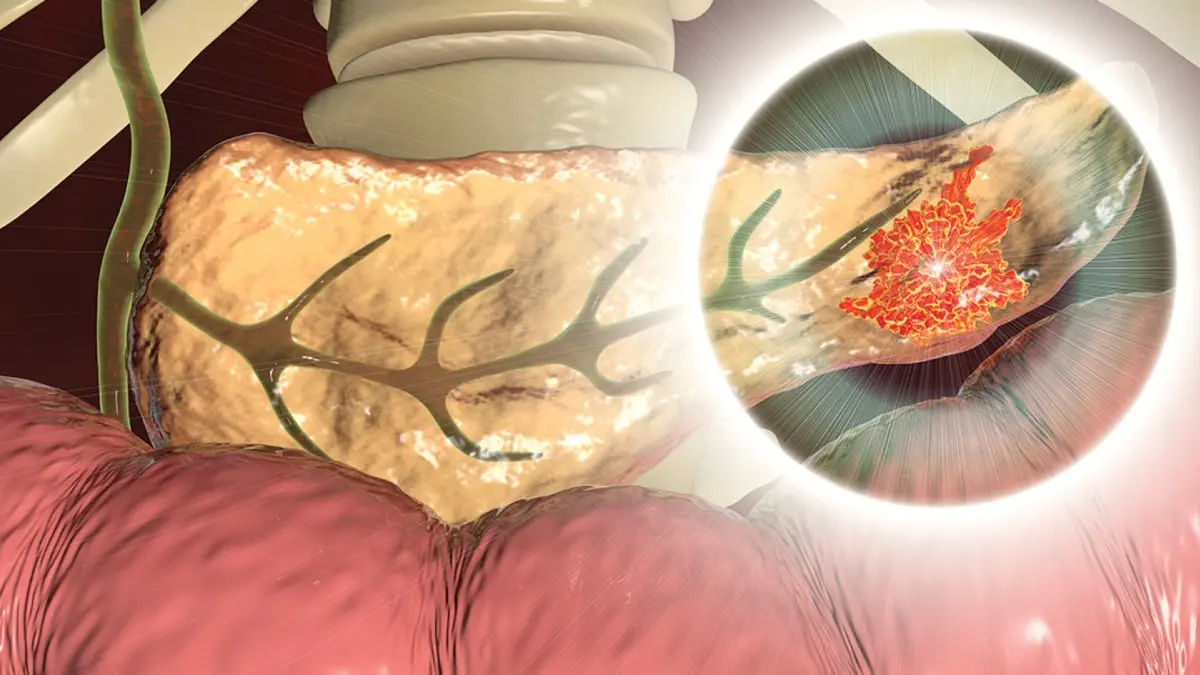
What is removed — and what is rebuilt
Removed
The head of the pancreas (the part tucked next to the duodenum); the duodenum (first part of the small intestine); the gallbladder and lower common bile duct; sometimes the lower stomach (classic Whipple) — or the stomach is preserved (pylorus-preserving Whipple); and nearby lymph nodes — important for accurate cancer staging.
Rebuilt
The remaining pancreas, bile duct and stomach remnant are reconnected to the jejunum (small intestine), so that digestion, bile flow and food passage continue. This reconstruction is the most delicate part of the operation — and the source of most complications when it is not done well.
Long term: most patients eat near-normal meals with enzyme support — small, frequent meals work better than large ones initially.
Do I need a Whipple?
The operation is recommended for:
- Cancer of the head of the pancreas — the main indication; see pancreatic cancer
- Cholangiocarcinoma — bile duct cancer of the lower duct
- Duodenal cancer or ampullary tumours
- Selected benign tumours of the pancreatic head
- Chronic pancreatitis with intractable pain — in carefully chosen patients
Two honest caveats. First, borderline tumours: neoadjuvant chemotherapy before surgery is increasingly standard — shrinking the tumour first can convert a borderline case into a safe one. Second, fit is individual: when a tumour needs an ablative or transplant strategy instead of a Whipple, you are told that honestly at the first sitting.
How it actually happens — step by step
- Staging and resectability. Triple-phase CT/MRI defines the tumour's relationship to the major vessels — this is the scan that decides whether a Whipple is safe to offer.
- Multidisciplinary review. Surgeon, oncology and radiology agree the plan — including whether neoadjuvant chemotherapy comes first for borderline tumours.
- The operation — 6 to 8 hours. Removal of the pancreatic head, duodenum, lower bile duct and gallbladder as one block with lymph nodes; then the reconstruction — pancreas, bile duct and stomach remnant reconnected to the jejunum.
- Monitored recovery. The first days in a monitored setting; hospital stay typically 7–14 days. Blood sugars are watched from day one.
- Diet, in stages. Liquids first, advancing to soft and normal food over 1–2 weeks; pancreatic enzyme capsules with meals are commonly needed.
- Oncology follow-up. Once recovered, adjuvant chemotherapy when indicated — a standard, evidence-based part of the plan that meaningfully reduces recurrence.
Preparation checklist
- Complete staging: triple-phase CT/MRI, tumour markers, fitness blood work
- Cardiac and anaesthetic fitness assessment
- Nutritional optimisation before surgery — ask our dieticians
- Blood sugar review if diabetic; stop smoking well ahead of surgery
- Ask the direct questions: How many Whipples does this team perform? What are your leak rates?
- Plan for 7–14 days in hospital and a helper at home for 6–8 weeks
The honest risks
| Common — managed on protocol | Serious / less common |
|---|---|
| Pancreatic leak — the most watched complication; rates fall substantially with experienced teams, and most leaks are managed without reoperation when monitoring is protocolised | Bleeding requiring intervention |
| Delayed gastric emptying — temporary; settles with time and prokinetics | Intra-abdominal infection / abscess |
| Wound infection; temporary poor appetite | New or worsened diabetes (part of the insulin-producing pancreas is removed) |
Recovery timeline — what to expect
- Days 1–3 — monitored setting: fluids, pain control, sugar monitoring
- Days 3–7 — diet advances from liquids to soft food; mobilisation increases
- Days 7–14 — home discharge once eating and mobile; enzyme capsules established
- Weeks 2–6 — strength rebuilds; small frequent meals; walking daily
- Weeks 6–8 — full recovery typically reached; oncology review scheduled
- Afterwards — adjuvant chemotherapy when indicated; long-term follow-up
What is the outlook?
Honest framing, both ways. The Whipple is the only curative option for these tumours — for resectable disease it offers the only realistic chance of cure, and for resected pancreatic cancer adjuvant chemotherapy meaningfully improves survival. Against that: this is major surgery whose outcomes are closely linked to surgeon and hospital volume — international evidence shows leak rates and survival improve dramatically at centres doing the operation regularly. So ask your surgeon directly about their experience with this operation. A team that answers precisely is the first good sign.
Life afterwards
Eating
Normal meals, with adjustments: enzyme capsules with meals (the reduced pancreas makes less enzyme), and small frequent meals rather than large ones, especially early on.
Blood sugars
Some patients develop or worsen diabetes; others remain non-diabetic. Sugars are monitored from day one and treated early when needed.
Follow-up
Oncology review and, when indicated, chemotherapy after recovery — a standard part of the plan, not a sign something went wrong.
Activity
Walking from early recovery onward; full normal activity by 6–8 weeks, guided by how you feel and your team.
Questions to ask your doctor
- Is my tumour resectable — what did the staging show about the vessels?
- Would neoadjuvant chemotherapy benefit me before surgery?
- How many Whipple procedures does this team perform — and what are your outcomes?
- Open or laparoscopic — what do you recommend for my tumour, and why?
- What is your protocol for detecting and managing pancreatic leaks?
- What does my recovery timeline look like — and who supports nutrition?
- What is the plan for chemotherapy after surgery in my case?
If you would like more confidence about your diagnosis or treatment plan, seeking a second opinion is reasonable.
Frequently Asked Questions
How big is the incision — and will it be keyhole?
Classically an upper abdominal (open) incision. Selected centres perform laparoscopic or robotic Whipple in carefully chosen tumours. Open surgery remains the standard recommendation in most Indian settings — the priority is a safe, complete cancer removal, not the incision.
What are the main risks of Whipple surgery?
Pancreatic leak (the most watched complication), delayed gastric emptying, bleeding and infection. Leak rates fall substantially with experienced, high-volume teams — and most leaks are managed without reoperation when monitoring is protocolised.
Will I digest food normally afterwards?
You will eat normally, but the reduced pancreas means less digestive enzyme — most patients take enzyme capsules with meals. Small, frequent meals work better than large ones initially.
Will I become diabetic after a Whipple?
Some patients develop or worsen diabetes since part of the insulin-producing pancreas is removed; others remain non-diabetic. We monitor blood sugars from day one and treat early when needed.
Why chemotherapy after surgery if the tumour is out?
Microscopic cells can remain despite complete removal — adjuvant chemotherapy meaningfully reduces recurrence and improves survival in resected pancreatic cancer. It is a standard, evidence-based part of the plan.
How long is the hospital stay and full recovery?
Hospital stay is typically 7–14 days, with the first days in a monitored setting. Full recovery takes about 6–8 weeks, with nutrition support. Diet advances from liquids to soft to normal food over 1–2 weeks.
How Dhaara Speciality Hospital can help
And if you need us, here is what stands ready for you under one roof in Yelahanka, Bangalore:
- HPB surgical expertise — pancreatic resections by Dr. Srinivas Bojanapu, with dedicated theatre access
- ICU-level perioperative care and protocolised nutrition support
- Honest staging — when a tumour needs ablative or transplant strategy instead, you are told so at the first sitting
- Full pathway — endoscopy, staging, surgery, critical care and follow-up under one roof
- Oncology coordination — neoadjuvant and adjuvant chemotherapy arranged
- 24/7 emergency and critical care — 87478 74666
Detailed information on the Whipple procedure, laparoscopic pancreatic surgery and surgical candidacy in Bangalore is available on Dr. Srinivas Bojanapu's specialist website: Whipple & Pancreatic Surgery — Dr. Srinivas Bojanapu.

Dr. Srinivas Bojanapu
MBBS, MS, FACRSI, DrNB, PDF — Surgical Gastroenterologist & HPB Surgeon with 16+ years of experience and 5,000+ procedures.
Medically reviewed by Dr. Srinivas Bojanapu — MBBS, MS, FACRSI, DrNB, PDF · Surgical Gastroenterologist & HPB Surgeon · Last updated: September 2026.
This page provides general information and is not a substitute for personal medical advice, diagnosis or treatment. Treatment decisions are always individualised after clinical assessment.
Sources & standards:
- Institutional figures on this page (patients treated) are based on Dhaara Hospital records; operative and recovery ranges reflect published HPB surgery literature.
- Perioperative management follows internationally accepted Enhanced Recovery (ERAS) and HPB surgery guidance.
Book Your Consultation
A Whipple is only as good as the team behind it. Bring your reports for an honest staging and surgical opinion at Dhaara Speciality Hospital, Yelahanka.
Words From Our Happy Clients
Glowing testimonials from satisfied clients share their positive experiences.
Dhaara Speciality Hospital is a trusted healthcare institution equipped with state-of-the-art facilities and a team of skilled surgeons, including specialists in laparoscopic procedures. Choosing Dhaara for your laparoscopic gallbladder surgery comes with several advantages.
More Reviews
Vinay T
India
Surprised at the excellent facilities
I visited Dhaara Hospital and consulted with Dr. Prathima, a fantastic gynecologist. She's professional, friendly, and listens to my concerns. Her treatment worked well for me, and she always suggests the best.
Suchetha
India
Surprised at the excellent facilities
Dr Sreenivas is brilliant. The way, he listens to the patients issue giving so much time inspite of his busy schedule. I am very happy to have met him for my mom's surgery. Best Gastro surgeon👏👏.

.webp)
.webp)