📍 61 Jakkur Road, Yelahanka, Bengaluru 560064 🚨 24/7 Emergency
📞
Call
💬
WhatsApp
📅
Book Appt

A hernia is when part of a bowel or fatty tissue pushes through a weak spot in the muscle wall that is meant to hold it in. It usually shows as a lump that appears when you stand or strain, and flattens when you lie down. Most hernias are repaired with a mesh patch, and it is one of the most commonly performed operations in general surgery.

Does this sound like you?

Tick the ones you have.
A lump in the groin that appears when you stand or cough
The lump disappears or flattens when you lie down
A dragging or heavy ache in the groin, worse when standing
A bulge around a previous operation scar
Discomfort that shows up after lifting, coughing or constipation
A lump near the belly button, in adults
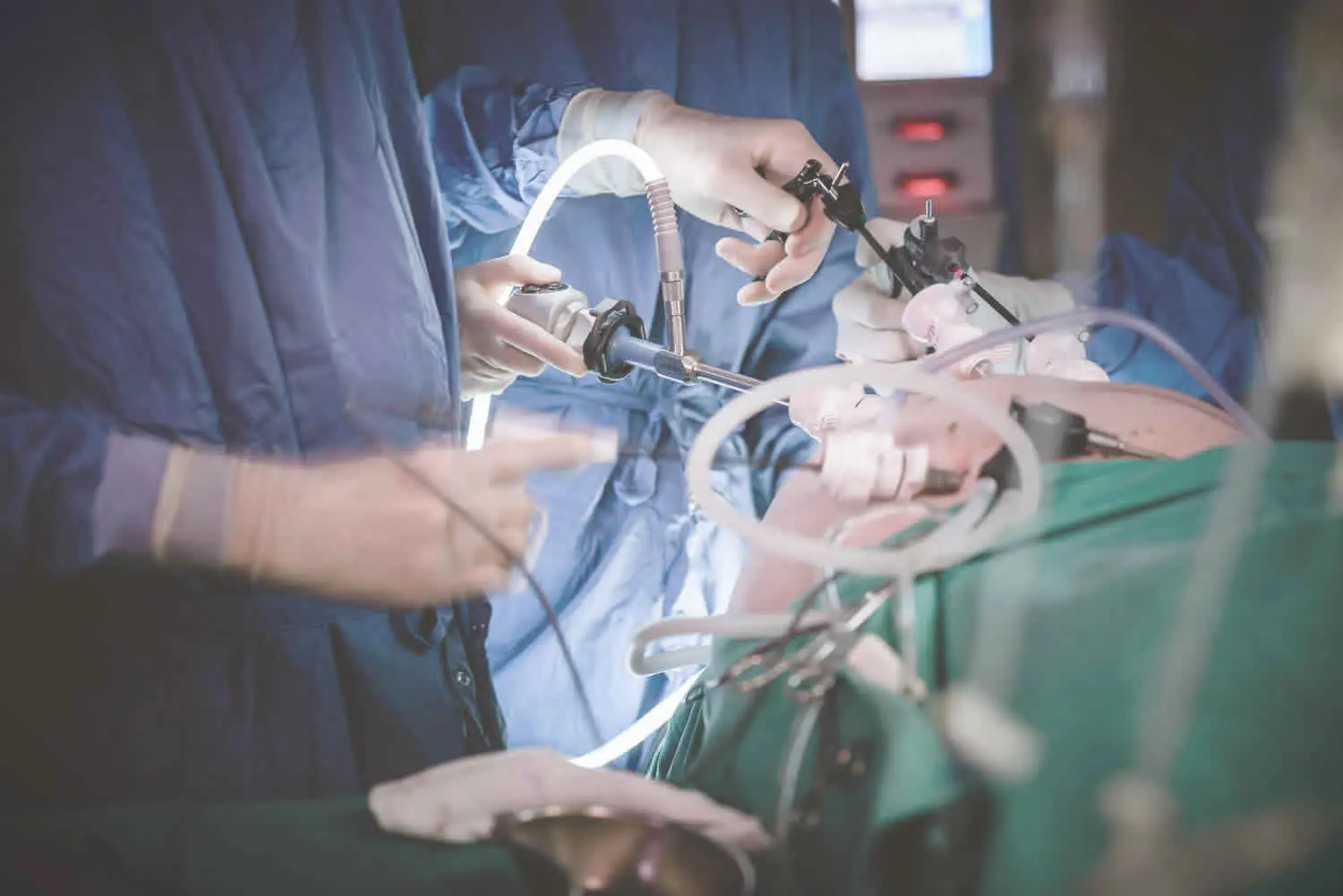
Surgeon's gloved hands performing a hernia repair operation using surgical instruments
Illustrative photograph of a hernia repair operation.

Where hernias appear

Hernias are named for where they appear. Almost all of them happen at one of four natural weak spots, and an incisional hernia happens where a previous operation has weakened the muscle.

Diagram showing the four common sites of a hernia A front view of the body marking four common hernia sites: the groin, the inner thigh, the belly button, and a previous operation scar. Inguinal groin — the most common Femoral inner thigh Umbilical belly button Incisional through an old scar Simplified diagram of common hernia sites.
7 in 10
inguinal hernias occur in the groin
6–12 hrs
how long a twist can damage bowel
Day case
most elective hernia repairs
Mesh
a patch that acts as a strong new wall

How a hernia is repaired

Almost all hernias are repaired with a mesh patch — a soft, permanent screen that is stitched over the weak point. The body's own tissue grows through it, so the area becomes stronger than it was before. Using mesh lowers the chance of the hernia coming back compared with stitching muscle alone.

1 Keyhole repair

Laparoscopic (TAPP or TEP) repair uses small ports and a camera. It is the common choice for a groin hernia, with smaller scars and less pain afterwards.

Because both sides can be repaired through the same small cuts, the opposite side is often checked and reinforced at the same time.

2 Open repair

A single incision above the lump, with the mesh placed directly over the weak point. It is still widely used and is often preferred for a large or emergency hernia.

It may be the better option if you have had previous abdominal operations, or if the scar tissue makes keyhole access difficult.

3 Emergency repair

A hernia that has twisted and lost its blood supply is an emergency. Surgery is needed straight away, and the twisted bowel is assessed to see whether it can be saved. This is why a hernia that traps should never be left until the next routine appointment.
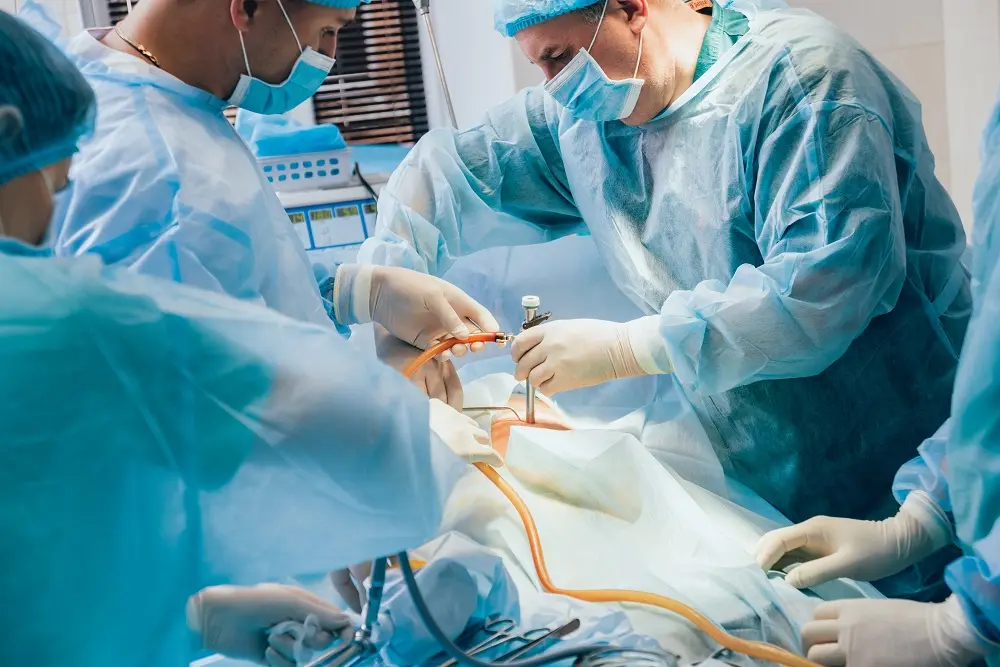
Surgical team performing a laparoscopic hernia repair in an operating theatre
Illustrative photograph of a hernia repair in theatre.

Recovery

Most groin hernia repairs are day-case operations. You are usually up and walking later the same day, and the dressing is just a small waterproof cover. Many people return to light work within a week or two.

Heavy lifting is avoided for around six weeks so the mesh can take hold — and it is worth taking that seriously, because lifting too much too soon is one of the main reasons a repair fails. Ask your surgeon about your own work before you go back to it.

Treat any long-standing cough, constipation or urinary problem at the same time. Those are common causes of strain, and they are worth fixing regardless — they push harder on a repair.

Go to hospital now if…

A hernia that is stuck out and will not go back in
Sudden severe pain in the lump or the belly
Vomiting, and not being able to pass wind
The lump turns red, purple or black
The lump becomes tender and hard
The lump is irreducible and growing over weeks

A trapped or twisted hernia cuts off its own blood supply. Within about 6–12 hours that can damage the bowel. Call 87478 74666 or go to the nearest emergency department — do not wait for a routine appointment.

Common questions
Do all hernias need an operation?

A small, comfortable groin hernia is sometimes watched for a while. But a hernia never repairs itself, and any that traps or twists needs surgery, so it is worth discussing the options early rather than later.

What is mesh, and is it safe?

Mesh is a soft permanent screen stitched over the weak point, and tissue grows through it. It is the standard repair because it spreads the pressure and makes the area stronger than stitching muscle on its own. It is not felt by most people.

Keyhole or open — which will I have?

Keyhole repair is usual for a groin hernia. An open repair is often chosen for a large hernia, for one that has trapped, or if you have had previous operations in the same area. Your surgeon will recommend one or the other based on your hernia.

How long before I can lift things?

Around six weeks. Lifting too much too early is one of the main reasons a repair fails, so it is worth planning your work and your help at home around that.

Can it come back after a repair?

Repairs are very durable and most people never have a problem again. The risk is higher if you lift heavy loads too soon, or if a long-standing cough, constipation or urinary problem is left untreated.

Why does it matter more in men?

Groin hernias are far more common in men. A new groin lump in a man should be checked, because the alternative causes — and the testicle itself — need ruling out properly.

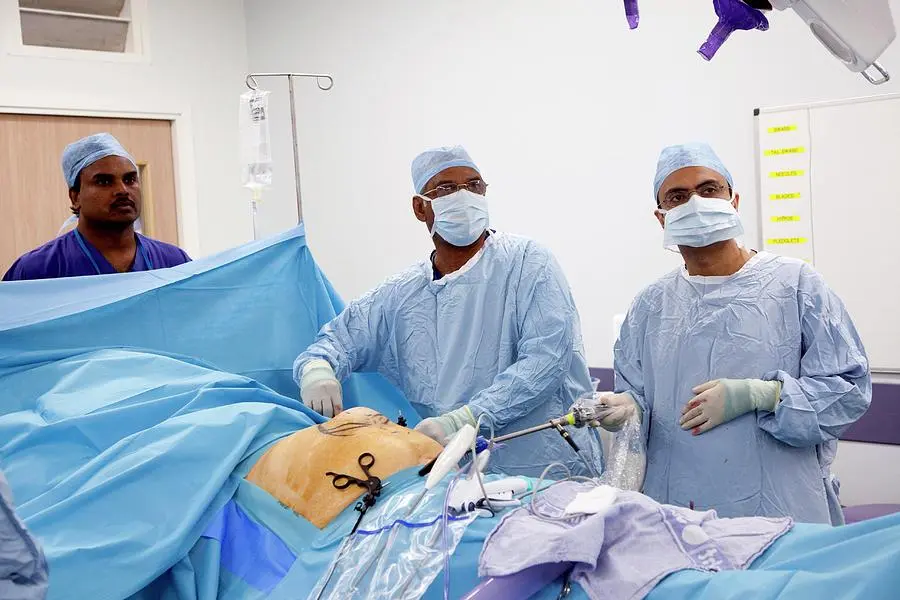
Operating theatre view of a surgical team carrying out an open incisional hernia repair
Illustrative photograph of a hernia repair in theatre.

A lump in the groin?

A hernia is easy to confirm with a short examination, and repairing it before it traps is far simpler than repairing it afterwards. If you have noticed a lump, get it looked at.

Call 87478 74666 Book an appointment

Medically reviewed by: the medical team, Dhaara Speciality Hospital, Yelahanka, Bengaluru.

Last updated: 1 October 2026

This page is written to help you understand what is going on. It is general information, not personal medical advice, and it cannot replace a consultation. Please talk to the treating clinician about your own situation.

Meet Our Surgeons

Get acquainted with our skilled surgical team, dedicated to delivering compassionate and expert care.

Words From Our Happy Clients

Glowing testimonials from satisfied clients share their positive experiences.

Dhaara Speciality Hospital is a trusted healthcare institution equipped with state-of-the-art facilities and a team of skilled surgeons, including specialists in laparoscopic procedures. Choosing Dhaara for your laparoscopic gallbladder surgery comes with several advantages.

More Reviews