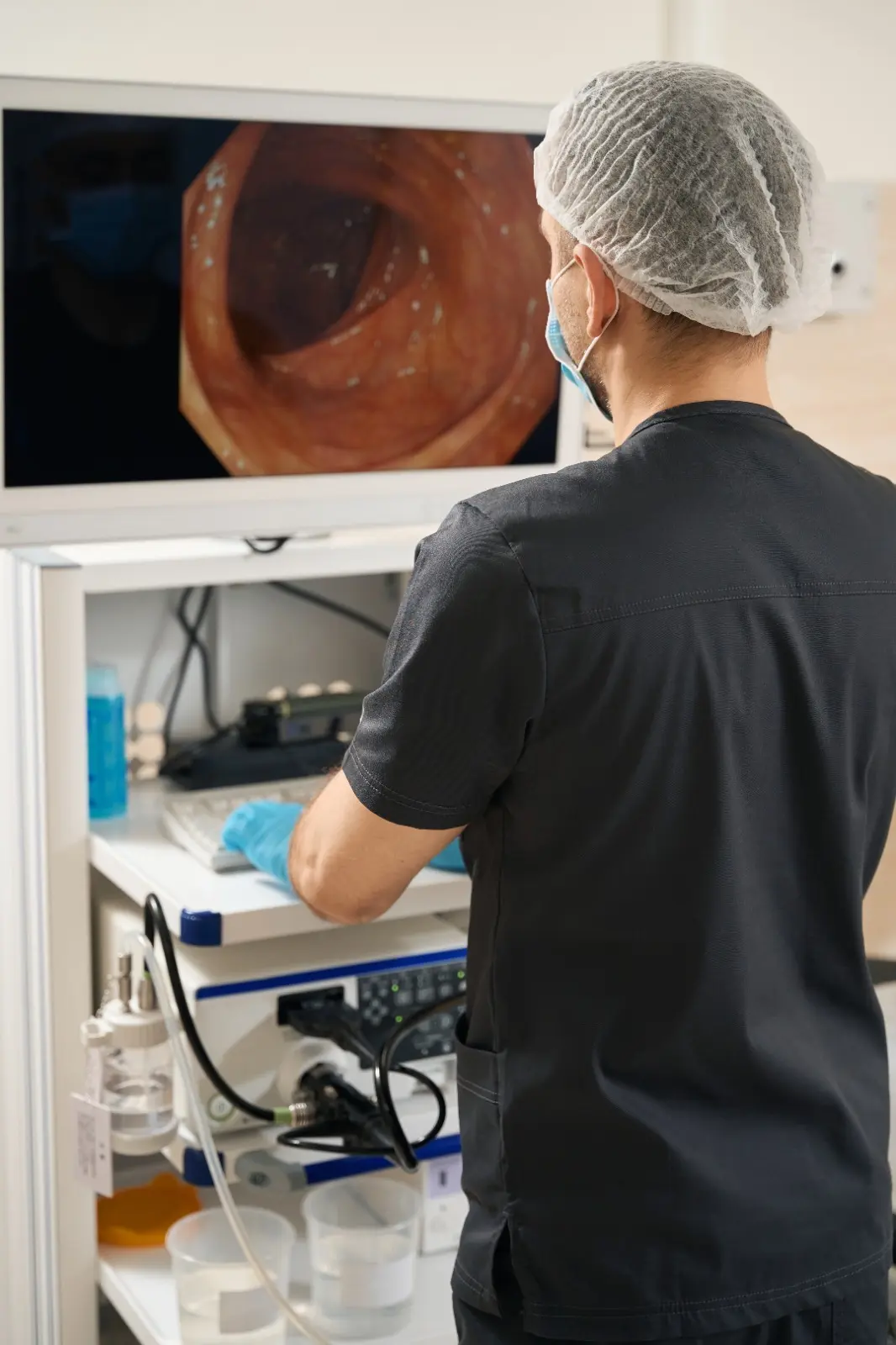
Looking for endoscopy in Yelahanka? Dhaara Speciality Hospital offers painless diagnostic and therapeutic endoscopy in Yelahanka, North Bangalore — including upper GI endoscopy, colonoscopy and screening procedures — performed by Dr. Srinivas Bojanapu (MBBS, MS, DrNB Surgical Gastroenterology) using modern, high-definition scopes. The centre serves patients across Yelahanka, Vidyaranyapura, Hebbal and North Bangalore, with same-week appointments and clear reports. Below you’ll find how endoscopy works, its types and benefits, and answers to common local questions. For complex GI surgery, see our gastroenterology & GI surgery centre or the dedicated surgical gastroenterology practice of Dr. Srinivas Bojanapu.
What is Endoscopy?
Endoscopy is a medical procedure that allows doctors to examine the inside of the body using an instrument called an endoscope. The endoscope is a long, flexible tube equipped with a light and camera, enabling high-resolution visuals of internal organs and tissues.
Endoscopy is used for diagnostic, therapeutic, and preventive purposes, helping detect abnormalities early and even perform minor surgeries without open incisions.
Types of Endoscopy
There are various types of endoscopy, depending on the part of the body being examined. Some common types include:
-
Gastroscopy (Upper GI Endoscopy)
- Used to examine the esophagus, stomach, and the first part of the small intestine.
- Commonly used for diagnosing acid reflux, ulcers, and gastritis.
-
Colonoscopy
- Examines the large intestine (colon) and rectum.
- Helps detect polyps, colorectal cancer, and inflammatory bowel diseases like Crohn’s disease.
-
Bronchoscopy
- Inspects the airways and lungs.
- Often performed to investigate persistent cough, bleeding, or suspected tumors.
-
Endoscopic Ultrasound (EUS)
- Combines endoscopy with ultrasound to obtain detailed images of internal organs.
- Useful for diagnosing pancreatic, esophageal, and rectal diseases.
-
Capsule Endoscopy
- Involves swallowing a small capsule with a camera to visualize the digestive tract.
- Ideal for detecting small intestine disorders.
-
Hysteroscopy
- Used for examining the uterus in women.
- Helps diagnose uterine abnormalities, fibroids, and polyps.
Why Do You Need Endoscopy?
Doctors may recommend endoscopy for various reasons, including:
-
1. Unexplained Symptoms
- Persistent abdominal pain, nausea, vomiting, or difficulty swallowing.
-
2. Diagnosis of Conditions
- To confirm or rule out diseases like ulcers, cancers, or infections.
-
3. Treatment Purposes
- Removing polyps, stopping bleeding, or dilating narrow passages in the digestive tract.
-
4. Monitoring Chronic Conditions
- Tracking the progress of diseases like Barrett’s esophagus or Crohn’s disease.
Benefits of Endoscopy
Endoscopy offers several advantages over traditional diagnostic and surgical methods:
-
1. Minimally Invasive
- Reduces the need for large incisions, resulting in quicker recovery.
-
2. Accurate Diagnosis
- Provides high-resolution images and real-time visuals for precise diagnoses.
-
3. Therapeutic Applications
- Enables treatments like removing foreign objects, biopsies, or stopping internal bleeding.
-
4. Outpatient Procedure
- Most endoscopies are performed as day-care procedures, minimizing hospital stays.
-
5. Early Detection of Diseases
- Facilitates early diagnosis of cancers and other life-threatening conditions.
The Endoscopy Process
The endoscopy process typically involves three stages:
-
Preparation
- Patients are advised to fast for several hours before the procedure.
- For colonoscopy, a bowel cleansing regimen is required.
-
Procedure
- The endoscope is inserted through the mouth, rectum, or other body openings, depending on the type of endoscopy.
- The procedure is usually performed under sedation or local anesthesia to ensure comfort.
-
Recovery
- Patients are monitored for a short period after the procedure before being discharged.
- They can resume normal activities within a few hours.
Why Choose Yelahanka for Endoscopy?
Yelahanka, a growing hub for healthcare, offers advanced facilities and expert care for endoscopy. Here’s why choosing endoscopy in Yelahanka is a wise decision:
-
State-of-the-Art Facilities
- Hospitals in Yelahanka are equipped with the latest endoscopic technology, ensuring accurate diagnosis and effective treatment.
-
Experienced Specialists
- Gastroenterologists, pulmonologists, and other specialists in Yelahanka have extensive experience in performing various types of endoscopy.
-
Comprehensive Care
- From pre-procedure consultations to post-procedure follow-ups, Yelahanka’s hospitals provide holistic care.
-
Affordable Options
- Endoscopy services in Yelahanka are competitively priced, making them accessible to a wide range of patients.
-
Convenient Location
- Yelahanka’s strategic location in Bangalore ensures easy accessibility for patients from the city and nearby regions.
Leading Hospitals for Endoscopy in Yelahanka
Several reputed hospitals offer endoscopy in Yelahanka, including:
-
Aster CMI Hospital
- Known for its advanced gastroenterology department and state-of-the-art endoscopy unit.
-
Columbia Asia Hospital
- Offers a wide range of endoscopic procedures with skilled specialists.
-
Manipal Hospitals
- Provides comprehensive digestive health care, including diagnostic and therapeutic endoscopy.
Preparing for Your Endoscopy in Yelahanka
To ensure a smooth procedure, follow these preparation tips:
-
1. Discuss with Your Doctor
- Share your medical history, allergies, and current medications.
-
2. Follow Fasting Instructions
- Avoid eating or drinking for the recommended duration before the procedure.
-
3. Arrange for Transportation
- Sedation during the procedure may impair your ability to drive.
-
4. Ask Questions
- Clarify any doubts about the procedure, risks, and recovery.
Post-Endoscopy Care
After undergoing endoscopy in Yelahanka, patients should follow these guidelines for a speedy recovery:
-
1. Rest
- Take it easy for the rest of the day and avoid strenuous activities.
-
2. Diet
- Start with light meals and gradually return to a regular diet as advised by your doctor.
-
3. Monitor for Symptoms
- Report any unusual symptoms like severe pain, fever, or bleeding to your doctor immediately.
-
4. Follow-Up Appointments
- Attend scheduled follow-ups to review test results or monitor recovery.
Common Conditions Diagnosed with Endoscopy
Endoscopy is instrumental in diagnosing a range of conditions, such as:
- Acid reflux and GERD
- Peptic ulcers
- Gastritis
- Colorectal cancer
- Gallstones
- Inflammatory bowel disease (IBD)
FAQs on Endoscopy in Yelahanka
-
1. Is endoscopy painful?
- Endoscopy is usually painless as it is performed under sedation or local anesthesia.
-
2. How long does an endoscopy take?
- Most procedures take 15–45 minutes, depending on the type and complexity.
-
3. Is endoscopy safe?
- Yes, endoscopy is a safe procedure with minimal risks when performed by experienced professionals.
-
4. What is the cost of endoscopy in Yelahanka?
- The cost varies based on the type of endoscopy and hospital but is generally affordable in Yelahanka.
-
5. Can children undergo endoscopy?
- Yes, pediatric endoscopy is available for diagnosing and treating conditions in children.
Conclusion
Endoscopy is a transformative medical procedure that enables early detection and treatment of numerous conditions. With cutting-edge facilities, expert care, and affordable services, endoscopy in Yelahanka is a reliable choice for patients seeking quality healthcare.
If you’re experiencing unexplained symptoms or require an endoscopic procedure, consult a reputed hospital in Yelahanka today to take the first step toward better health.


.webp)
.webp)